

Kitsune Holo Audio KTE May DAC by David Abramson
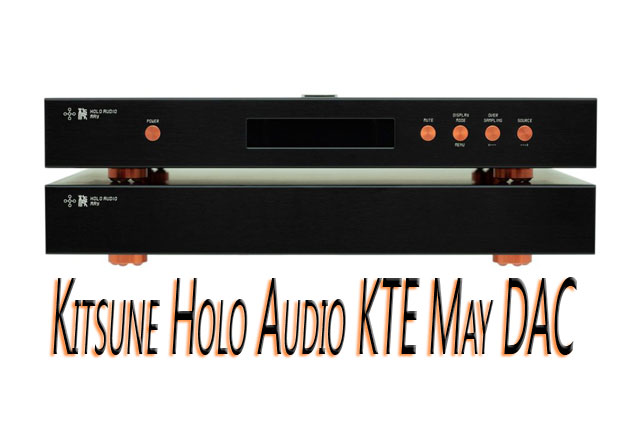
May Day!! May Day!!
 “As to R2R DACs, they are extremely simple to build. You can build one yourself if you just search a bit online! Getting them to be low noise and distortion is much harder.” It’s my favorite objectivist Amir, chief measurer and orchestrator over at audiosciencereview.com, posting.
Well, it would seem it’s much MUCH harder as, per ASR, it’s not often achieved. R2R (measurement) failure abounds! Further along in the thread; the one that talks about how well the Kitsune Holo Audio KTE May R2R DAC measures, we happen across an objectivist unfortunately named VeerK (probably not his real name) who writes “Nice; good job to Holo Audio for engineering an R2R DAC that finally measures with the big dogs. Very curious how folks over on those other forums will try to describe this DAC with their flowery words. A DAC with their ‘magical’ R2R that measures well might make their heads explode.”
Flowery words!? Exploding heads?!! Exploding Kittens maybe (it’s actually a fairly challenging card game); but flowery words indeed! Mine are buttery-soft and flakey like a good croissant! Some people…
Well those ASR guys will be happy to know that for this review I blindfolded myself to begin the blind ABX testing portion and then… promptly tripped on Brandy (my cowhide rug with the visible brand) and fell into the wall almost toppling over my Design Within Reach Pablo Elise acrylic and stainless steel halogen lamp in the process (which by the way, gives off exactly the same wavelengths of light as a 10 dollar halogen lamp from IKEA!). NO I haven’t measured!! I can just tell! Without this stupid blindfold that is.
NOW do you see why we reviewers HATE blind testing!!?? It’s a stupid idea in a small room with furniture. You almost kill yourself every time plus you can’t find your friggin’ listening chair!
.jpg?KeepThis=true&TB_iframe=true&height=430&width=700)
Brandy the cowhide rug replete with brand
 Also, if everything that measured similarly sounded exactly the same, do we still have a hobby here? I mean, what’s the friggin’ point?! Lets just go bass fishin’. Perhaps Julian Hirsch was right long ago in Stereo Review and it’s all the same. Maybe I DON’T really prefer the Audioquest Carbon USB cable to all the others I’ve heard and I just think I do. I dunno. Maybe let’s just have a scotch and forget this whole listening thing. Matter of fact, forget the Holo Audio May KTE DAC under review here. One sec… I’m gonna Duckduckgo R2R DIY and see if I can pull this off myself. How hard could it be? Let’s see here… resistors; gotta match those. Closely. Some sort of power supply and a cord… A few FPGAs and maybe go on Fiverr and hire a computer programmer to handle the coding there, and then… On second thought, let’s let experienced audio and electrical engineers who know what in hell they are doing have a go at it, shall we?
Now then… my short-lived DAC designing dreams aside, preliminary research (Google) seems to suggest The KTE May is one of the few DACs about which objectivists and subjectivists alike are united in their praise.
Whereas previously one group thought the other cretinous ninnies and the ninny group in turn thought the other egg-headed dotards who never actually listened to anything and couldn’t do a single push up, perhaps this DAC means they can lay aside their differences and unite for the betterment of all, following closely the example of United States politics.
Too much to hope for? Well, one can dream. So long as you precisely measure the synchronicity of the fronto-temporal brainwaves that are hypothesized to result from said ‘dreaming.’ I suppose the real parallel question is why would anyone want, say, a tube amp that measures perfectly flat and sounds exactly like a solid-state amp? Just buy the solid-state amp! Less heat/less mess!
No; tube amp buyers generally want at least a trifling amount of ‘tube’ amp sound; the ‘distortions’ known as tone, space and weight that comes part of the deal. Take those things away and you’ve got a space heater that works slightly less well than an 88 dollar one you can have delivered tomorrow from Bezos and which sounds exactly the same as a ruler-flat-measuring entry-level Sony receiver; which I suppose, is the objectivist’s theoretical ideal?Sheesh.
Maybe we DON’T have a hobby?! Or maybe audiophiles have sonic preferences based on what they believe their recordings should sound like to THEM and don’t all want to hear precisely how bad certain recordings are and all the artifacts on the good ones. Maybe, since they are not in charge of mastering them, those phenomena actually get in the way of their enjoyment of this so-called hobby; i.e. listening to music for enjoyment and the pursuit of the ideal collection of boxes there for.

.jpg?KeepThis=true&TB_iframe=true&height=430&width=700)
Entry level Sony receiver which very probably measures perfectly on ASR
Listen; don’t listen to me! I’m still recovering from my ill-fated attempt at blindfolded testing. My head is spinning. Listen to the Kitsune engineer who goes by Bimmer100 who writes on their website, “Here, we can see that, for audio, we should understand that the audio industry’s existing measurement spec. can not correspond to people’s listening experience. We are not able to use those numbers to quantify our listening pleasure. These specs tend to be analyzed from the [standpoint of] completeness of the content. However, this is not the case for human feelings. [There is] complete information, but the order of the [content] will have disastrous consequences. Likewise, more information is not meant to be better than less information, and [in] a well-designed non-oversampling DAC, we will find richer and more natural details.” Wait a minute! Just which side are these Kitsun-ites ON!!?
Possibly the same one as Peter Lie, Lumin audio firmware lead engineer who says elsewhere on the interwebs, “Arguing whether something should sound better or not based on some theory is usually futile. The important thing is to hear it.” And this Lie guy has the audacity to call himself an ‘engineer’!? Hashtag Sick!
Well then can we? Have it ALL I mean? Our NOS and our R2R and our hobby and eat it too?
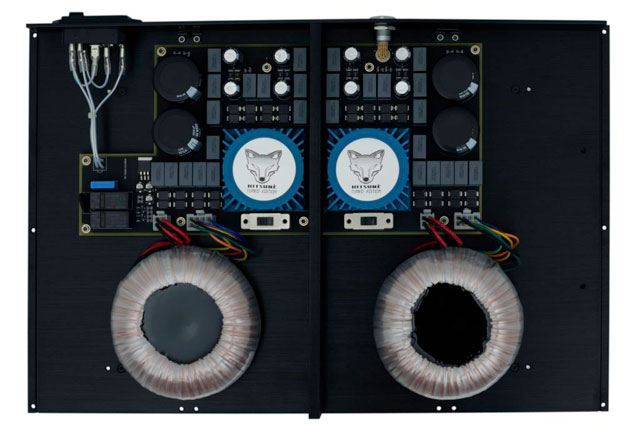
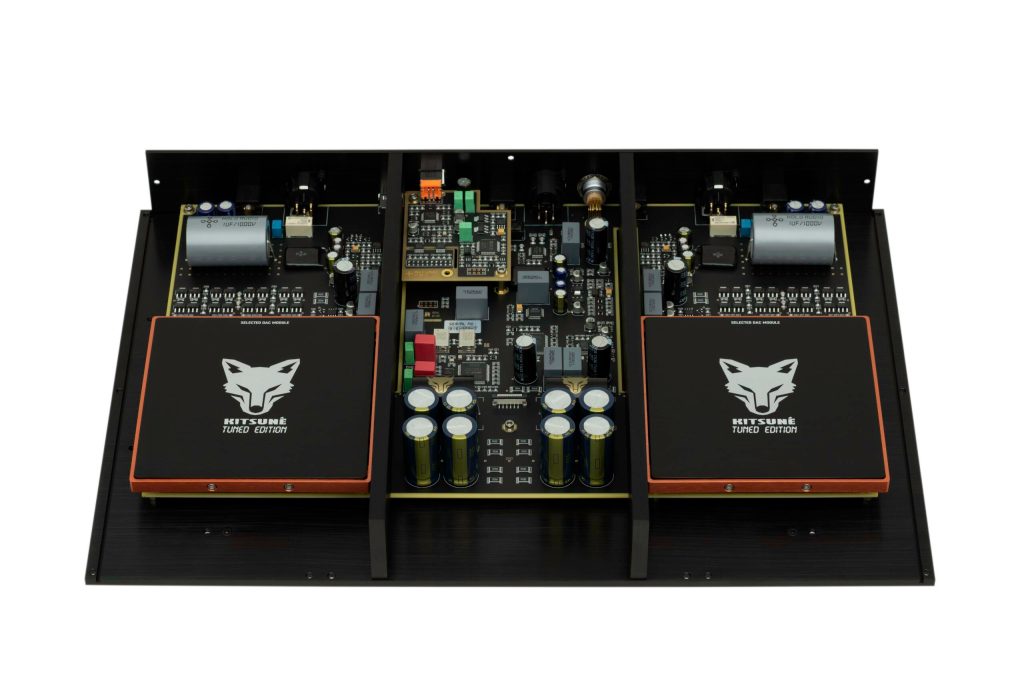

One DAC to find them and in the darkness… (possibly) bind them?
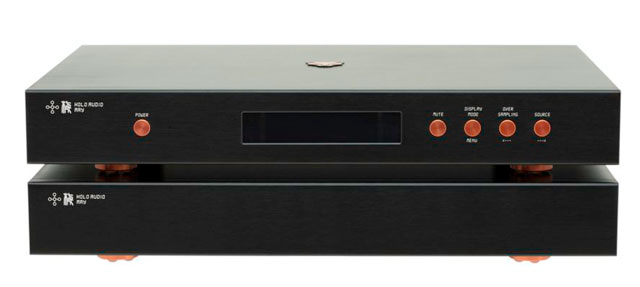
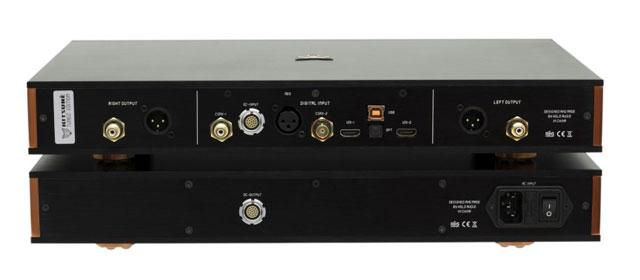
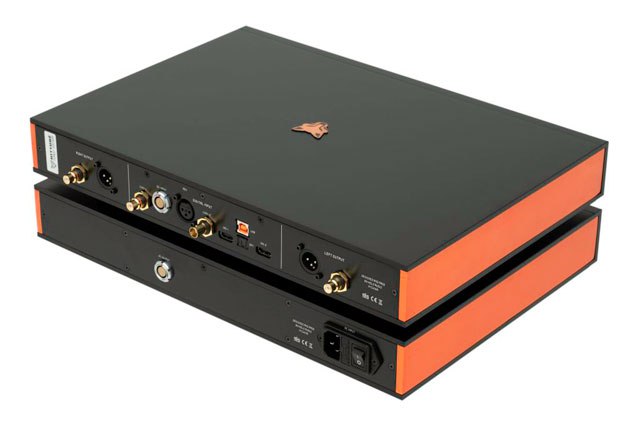
 This is a two box affair. Well, it’s one single shipping box with two smaller boxes inside, one containing the May’s brawny power supply and one containing the May’s well-measuring brains and by the way it’s damnably heavy. Like amplifier heavy. The back pain sufferers among you should consider yourselves warned! “I’d like Amir to measure the friggin’ weight of this thing,” I mumbled to myself. I sat the brains upon the brawn as instructed, connected them with a DC cord and in process could not help but admire the beauty of the coppery keen side panels and how they complemented the coppery keen buttons up front. These buttons let you select your source, select whether sound is processed or un (non-oversampling mode, oversampling etc.), toggle the display on or off, mute the unit and of course, turn it on (however you will take that).Did I mention the two boxes together are heavy? They are. Bend at the knees!! The May KTE represents the maximum topped-out level May (above the L1 and L2 models) and features an absolute panoply of designers’ dream parts like silver wiring, custom made and reportedly sonically preferable KTE-only special capacitors and tighter tolerance DAC modules “hand selected to have the best measurements compared to averages.” It also has my favorite upgrade; the Titanis 2.0 USB input module which is reportedly superior to the XMOS xu208 featured on the lower end Holo Spring 2 DAC and on the base model May.
.jpg?KeepThis=true&TB_iframe=true&height=430&width=700)
The professionally designed and superbly well measuring heavyweight KTE May with its coppery keen buttons and side panels
Now, by way of comparison, the first stanza from Wallace Stevens’ The Bird with the Coppery, Keen Claws:
Above the forest of the parakeets,
A parakeet of parakeets prevails,
A pip of life amid a mort of tails.
Stevens was a legendary abstract poet who worked his entire career as an insurance executive at the Hartford Accident and Indemnity Corporation! A better comparison to the May DAC I cant conjure…
Anecdote has it he would dictate some of his memorably abstract work to his assistant on his way out for the day. I can imagine him in pre-Covid times maskless, putting on his hat and coat, grabbing up his finely made wood-handled umbrella and saying “Angela, I’m leaving now, will you take this down for me?”
Call the roller of big cigars,
The muscular one, and bid him whip
In kitchen cups concupiscent curds.
Let the wenches dawdle in such dress
As they are used to wear, and let the boys
Bring flowers in last month’s newspapers.
Let be be finale of seem.
The only emperor is the emperor of ice-cream…
The Lusty Month of May
 That’s about all the time I had with it too. Tim O’Connor of Kitsune was understandably coppery keen to keep one of his latest production coppery May DACs in active rotation among reviewers/listeners keen to lay ears upon it; KTE Mays being newer and in relatively short supply these days and all. So I’m gonna tell you straight out this is one of, if not the, best DACs I’ve ever heard. Even during the week or two long continuous play/break-in period in my headphone system, except for perhaps a slight welcoming warmth, nothing stood out except for my own nagging feeling that I was hard pressed to point out a single sonic area in which I’ve heard this DAC bettered.I’ve not heard quite this degree of touch, space, bass and detail on good ol’ ‘Sunday at the Village Vanguard’ on Tidal on other converters. Instrumental separation was fantastic. Did I mention the (wide-open) spaciousness? Oh, I did.”
There are warmer DACs like my previous Burr-Brown 1704 fueled Aqua S2 La Voce or my briefly owned MHDT Orchid with WE tube or the PS Audio DS Jr I recently owned (and sold). There are very detailed DACs like those from Benchmark and Chord (I’ve had the excellent DAC 3 and the less-excellent Hugo here) and all the high-end Sabre rattlers, and there are 30K dacs none of which I have heard except in a friend’s system for a day or so (DCS Rossini). Then there’s my bevy of ‘headphone system’ DACs, like the Sabre-toothed Resonessence Concero HD, Burr-Brown 1796 based Arcam IR DAC with Sbooster LPSU and the Schiit Gungnir Multibit, all of which do different things and stuff and do them well.(And then there’s my reference DAC, the Aqua La Voce S3, but more on that later!)
But as soon as I heard a (somewhat) burned-in May (circa 250-300 hours; Tim of Kitsune recommends 500) connected to either my ALO Studio Six headphone amp or my Monoprice THX 887, I knew this would be a difficult review to write. Flowery prose or none, the May DAC gets so much right even I started to think measurements might matter! Of course, every other DAC I’ve heard in my recent experience also probably measures just as well or better but they aren’t quite at the playback level of the May.I’d have noticed.
In my headphone system, with my iMAC hosting Audirvana and feeding the May via my new fave USB cable the AQ Carbon, the speed, retrieval of detail and general tonal even-handedness this DAC displayed were quite extraordinary. If this DAC wasn’t ‘perfect’ it was very difficult to describe any perceived imperfections. It did not seem to editorialize, over-hype the bass or roll off the extremes. It did not irritate or highlight. It seemed neither particularly clinical nor particularly warm. If you’re looking for something in particular, I’d venture to say you wont find it here; the May doesn’t seem to have much of a ‘flavor.’
 Mozart’s No. 9 piano concerto (‘Jeunehomme’), here played by Mitsuko Uchida with conductor Jeffrey Tate on Philips via Tidal is one of my bellwethers for PRaT and engagement. Since I’ve heard it so many times, if I’m engaged and listening through till the end, something great is happening; and it was. The first movement of this decent-but-not-great recording positively gallops along but not so quickly that I didn’t notice that Uchida’s piano sounded distinctly more ‘bell-like’ than I’ve heard it before and seems to have more overtones than I may have noticed previously. In other words, it’s not as one dimensional and ‘tinny’ as it can be on a lesser converter. Echoes and decay from those top notes pinging in the hall go on and on; a hallmark of great resolution.And you can sort of sense the felt-hitting-string gestalt of the instrument better than with most other DACs in my experience.The second movement, at a more stately pace, underscores the added decay time I’m hearing post hammer-hitting-string.
Lemme say here and now I LOVE this proprietary Titanis USB input! The May’s USB input is absolutely LEGIT and it absolutely held its own with its back-facing brethren. In fact, in both my headphone system and main rig, I actually slightly preferred it to my usual dish of re-clocked and cleaned USB sent to the BNC input via either my Schiit Eitr and Chord Clearway BNC digital cable or my Resonessence Concero HD (used in its capacity as a converter) with same. I even tried my fave PUC 2 Lite with AQ Carbon AES digital cable and preferred the May’s USB input yet again!
 The (supposedly) ‘cleaner’ converter-ized signal was in some cases slightly steelier to my ear than the direct feed from my iMac via AQ Carbon USB. I even tried plugging the Schiit Eitr’s power supply into my Puritan Audio PSM 156 AC purifier. Nope; same preference for USB sans Schiit. Yup; Titanis Rex is legit! The best USB input I’ve heard on any DAC in my experience. That includes the one on my Aqua La Voce S3, whose USB input while pretty good, still has me playing around at times with converters and reclockers trying to wring just that bit more sonically from itsBNC or AES schoolmates. No such urges arise with the May. I declare then the USB king is dead! Long live Titanis the 2.0!!
It was after listening to the best rendition of ‘Sunday at the Village Vanguard’ with Mr. Bill Evans I’ve ever had in my headphone rig that a question began to form in my mind; if measurements are so all-fire important why does the KTE May seem to better my other two headphone rig DACs sonically!?These may be DACs priced under a grand, but both no doubt measure near perfectly as there’s an ESS sabre in one and a Burr-Brown in the other. Via my ALO Studio Six headphone tubed amp and Shure SRH1540’s, the similarly flat-measuring and much pricier May immediately shows both a clean pair of heels in that it is more extended both ways up and down than the Arcam and less ‘shiny’/more fulsome tonally than the ‘sabre-ized’ Resonessence HD Concero and this is pretty obvious even on short exposure. It is also more detailed than both. In the ‘big rig’ main system, particularly under the musical minimalist microscope that is my new Lejonklou Boazu integrated amp, such differences would become even more apparent.
 There it showed somewhat cleaner and deeper bass, more engaging speed, more spaciousness, more pronounced instrumental separation, more detail, a blacker background and less ‘irritation’ on irritating recordings and on and on. It flat out sounded a bit ‘bigger’ than the both of them as well. Is it the R2R ‘magic’ on tap here? Whatever it is, like Tom Cruise’s megawatt smile or Garth Brooks’ megawatt appeal, I’m not sure it can be measured. It can definitely be heard though, and fairly readily as DACs go. Yes, my girlfriend heard it too. After I biased her of course; or did I!? Huh? Huh!!
Certainly, in either my main system or via headphones, this is some of the best string tone I’ve ever heard from a DAC and Leonidas Kavakos playing Beethoven’s violin concerto is exhibit A, your honor. Due to the superb resolution, I felt I could hear the pressure variations; how firmly Kavakos was bowing the strings better than I ever have before. I could also precisely count his breaths Jand this man can breathe. Of note, in my headphone system my Aqua La Voce S3 can approach the May in this regard but only when aided by my Puritan PSM 156 power conditioner. It doesn’t quite get there without it, where the string tone is a touch steelier and less full of overtones. For unknown reasons (great power filtering built in??) I didn’t prefer the May DAC plugged into the Puritan conditioner. There was more clarity but the treble seemed a hair tipped up.
Returning to the May, the heft of the orchestra; the weight and depth of the bowed cellos and basses and attack of the drums was unparalleled. Kavakos’s playing lights up the hall with echoes that go on and on and I’m pretty certain these kind of decays are just not as readily apparent on my other dacs. And the air around the tone; with the May, such things are readily apparent. It isn’t that you can’t hear them with the other dacs; you can. But with the May, they are easy to hear and right there.
He continued breathing (thankfully) through the first movement of the Brahms violin and piano sonata No. 1 in G in duet with Yuja Wang at the piano wherein his brief pizzicato segment almost midway through was among the most delicate and realistic I can recall hearing on my system. So too the May makes the greatness of this recording absolute



Stereo Times Masthead
Publisher/Founder
Clement Perry
Editor
Dave Thomas
Senior Editors
Frank Alles, Mike Girardi, Russell Lichter, Terry London, Moreno Mitchell, Paul Szabady, Bill Wells, Mike Wright, and Stephen Yan,
Current Contributors
David Abramson, Tim Barrall, Dave Allison, Ron Cook, Lewis Dardick, John Hoffman, Dan Secula, Don Shaulis, Greg Simmons, Eric Teh, Greg Voth, Richard Willie, Ed Van Winkle, Rob Dockery, Richard Doron, and Daveed Turek
Site Management Clement Perry
Ad Designer: Martin Perry
Be the first to comment on: Kitsune Holo Audio KTE May DAC by David Abramson