

Stereo Times’ Most Wanted 2023





Aric Audio Super 6SN7 Linestage ($3,995/reviewed here): Being Aric Kimball and Aric Audio in high-end audio is akin to being David in a world filled with Goliaths. Aric Audio’s Super 6SN7 linestage exemplifies this by giving a performance far exceeding its price point. The sound was consistently excellent whether I partnered it with expensive tube mono-amps, tube stereo amps, or solid-state mono-amps. It never made me feel like I was taking a step back when it replaced my reference VAC Renaissance Mark V preamp. During my review experience with the Super 6SN7, I continually asked myself, “How much did Aric tell me this preamp costs?” The Super 6SN7 was exceptional with its ability to deliver dynamics, detail retrieval, ambiance, dimensionality, tonal colors, and exceptional bass extension and authority. (Mike Wright)

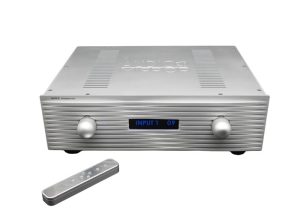
Audio Mirror – Wave Tube Line Stage Preamplifier ($13,000/reviewed here):
This preamplifier is based on a transformer-linked (Lundahl transformers) balanced circuit with no capacitors in the signal path and is tube rectified with high-gain signal tubes. The Wave offers a silky, dead-quiet overall perspective with world-class dynamics, tonality, and spatial qualities that rival many more expensive tube-based line stages. It brings excitement and aliveness to any system I have tried it in. It’s not inexpensive at its $13,000 retail price but worth every penny because of its performance and build quality. Review forthcoming (Terry London)
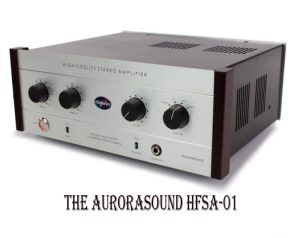
Aurorasound HFSA-01 Integrated Amplifier ($3,680/reviewed here): There’s a certain potency in the Aurorasound HFSA-01’s austere, retro appearance that just says “Amplifier: hold the frills.” It quickly adds, “But I’m also adorable. Please take me home.” And so, at the end of my review period, I did! When paired with sufficiently efficient speakers, it is illuminating, vibrant, detailed, and surprisingly dynamic, all wrapped up in just a hint of EL84 tube warmth. Bespoke Japanese transformers lend it among the jettest of jet-black backgrounds, and there is nary any electrical self-noise to speak of. If you can get away with (a feisty) 14 watts and think remote controls are for televisions and massage chairs, the Aurorasound HFSA-01 will thrill you with its operational simplicity, retro good looks, and sonic purity. A 30-day trial period and a selection of optional Synergistic Research fuse upgrades cinch the deal. (David Abramson)
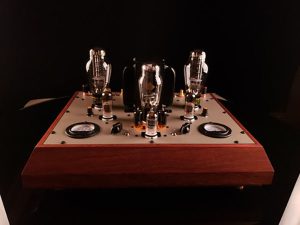

Decware Zen Sarah Amplifier, Model SEWE300B ($4,500 factory direct): This amp was named after designer Steve Deckert’s daughter, Sarah. Decware customers have asked for a 300B amplifier for nearly 20 years. The Sarah SEWE300B is a pure Class-A design, Single Ended Triode using a single 300B output tube that produces 4 to 7 watts per channel depending on the voltage regulator tubes used. It’s a purist design, hand-built point-to-point with no circuit boards and no global negative feedback used or any solid-state parts.
Deckert designed and voiced the Sarah with the Western Electric 300B Triode. It has a built-in preamp stage that is preset with the proper gain structure, giving the amp a better sound when no preamp is used. Decware is factory direct sales only and has a cult-like following. Need I say more? Well, I have the Sarah as my own, and it is captivating and truly remarkable at this price. The midrange was open, revealing, and colorful, while the treble was extended and airy with purity and sweetness. A version without tubes is also available, allowing you to control costs or choose your favorite tubes. (Key Kim)
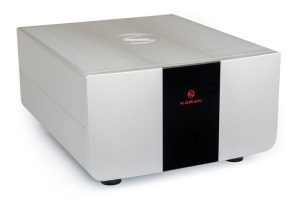
Karan Acoustics Master Collection POWERa Dual Mono Stereo Amplifier ($53,000): The state-of-the-art Karan Acoustics POWERa produces a powerful 650-watts into 8 Ohm in Class-A design. They don’t run hot like traditional Class-A amplifiers, which run at a constant high bias. Cleverly, the POWERa utilizes sliding Class-A bias circuits. The bias level is adjusted based on the signal in real-time.
The POWERa produced an enormous soundstage with realistic dynamic swings. From pianissimo to fortissimo, the system handled it all with remarkable realism. The POWERa can capture the full sweetness, warmth, and complexity of any orchestra’s dynamic range in a manner that is second to none. (Key Kim)

LSA Discovery HyperDrive-2 Headphone Amplifier and Preamp ($999, Intro sale is $799/reviewed here.) This handsome “hybrid” unit has a tube buffered input stage and solid-state Class AB output stage, providing up to 2 watts of power into 32 Ohm headphones. The review unit sported the HD-2’s new vented top plate, out of which its two buffer circuit tubes protrude. Conceived and built for Walter Liederman’s underwoodhifi.com, the design two engineers on the HyperDrive 2 project were Viet Nguyen and Jan Hofland. Mark Schifter, who has led the Underwood DEV TEAM for over a decade, worked with both to birth their concept into physical form. Nguyen brought us the fantastic LSA Discovery Warp 1 power amplifier reviewed in these pages in 2021.
The LSA HyperDrive-2 Hybrid Stereo Preamplifier/Headphone Amp is an exceptional sounding and toe-tapping hybrid preamplifier and headphone amplifier, whether for its affordable price or despite it. The HD-2’s gain settings may make anyone with hard-to-drive headphones a happy camper. Do reach out to Walter Liederman at underwoodhifi.com and give the HyperDrive 2 a listen (Greg Voth)
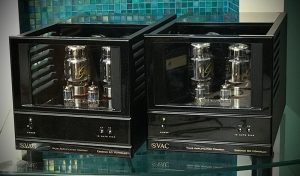
Valve Amplification Company (VAC) Essence 80 Monobloc Tube Amplifiers ($9990 each):
Is it too presumptuous to honor something that is not yet in my possession or on the VAC website as of the time I write this? I think not because the Essence 80 monoblocs were on my Most Wanted list before they even existed. VAC-powered rooms captured my attention at the many audio shows I attended. VAC consistently powered the best-sounding rooms, and I lusted after a VAC amplifier. But the smallest one weighed 100 pounds, and that was never going to happen in my house. That was too demanding for biannual seasonal swapping.
VAC line stages come in two chassis, and I wish VAC’s smaller amplifiers could come the same way to make their weight manageable. VAC does make two chassis amplifiers, but the weight of each chassis exceeds my limit. Then, in what I consider a brilliant idea, Kevin Hayes introduced the Essence line of small format separates, including a line stage, phono stage, and monoblocs. Kevin calls them monoblocs, but since I had wanted a two-chassis amp for so long, I like to think of them as my long-awaited stereo amp in two-chassis. That description is not far off since two of these 9” wide beauties (15” D x 8.75” H) can share a single shelf space or platform. In my system, they will share a platform.
Essence 80s are rated at 86 watts RMS continuous into 4, 8, or 16 Ohms with separate taps provided for each. The tube complement is a matched pair of Gold Lion KT88s and two NOS Philips 6189W (12AU7 type) per chassis. The amplifiers incorporate VAC’s patented iQ Continuous Automatic Bias System and protection circuit. Each monobloc weighs approximately 39 pounds and is available with either a black or silver fascia. Kevin Hayes has informed me the website will be updated soon, and Essence products are shipping now. I have a pair of monoblocs on order and look forward to doing a full review. (Don Shaulis)
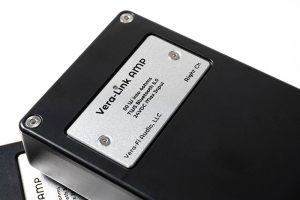
Vera-Link TWS Bluetooth Wireless Amplifiers ($199/pair/reviewed here): Vera-Link Bluetooth amplifiers and a spare pair of speakers, in my case, Vanguards, have delivered daily enjoyment throughout their review and beyond, thanks to their accessible and easy-to-use tech and good sound. The Vera-:Links are small mono amplifiers (50 watts each into 4 Ohms), each powered by a separate 24V power supply, which connects to speakers using included banana jacks; once activated, they discover one another wirelessly and are easily operated via Bluetooth using your computer, phone or pad. Performance at the affordable introductory price of $199US should bring smiles to many faces – they certainly have here. Surf over to www.verafiaudiollc.com and snag a pair! (Greg Voth)

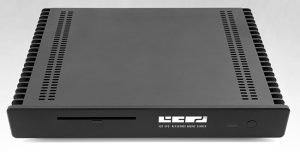
432 EVO Aeon Music Server ($7800 in black or silver/reviewed here): The 432 EVO contains a quality TEAC drive, tuned to rip at 16x speed for low noise and high-quality rips, using the bit-perfect cdparanoia engine. Once the CD has been ripped, the disc will automatically eject (it sits poking apart way out of the slot), and the media server on the 432 EVO will automatically add a newly-ripped CD to its database. Note: This drive only rips; it is not a disc player.
The 432 EVO Aeon offers a selectable set of unique transformations, mainly playing files at 432Hz, as opposed to the standard 440Hz (“A” on the modern piano), today’s most widely used orchestral tuning frequency. 432Hz is said to make for a better listening experience. Many articles about the frequency and a few thoughtfully designed audio components take advantage of this special frequency/vibration.
The quiet and headroom wrought by the Aeon’s dual power supplies were impressive and addictive. This quiet depth was notable when listening to Tessa Souter’s rendition of “A Timeless Place (The Peacocks).” As Souter sang lyrics that softly caressed, layers of depth reached far back on that soundstage. “Sky Above,” from Jacob Collier’s Djesse Vol. 2 (2019 Hajanga Records), played with such ease and effortlessness that it had to be the Aeon’s use of dual SBooster power supplies at work. Boosters are high-quality upgrade power supplies for almost all standard switch-mode adapters of small devices. Even in a mass of notes, the depth and air created by the Aeon were delineated and impressive. Notes rose out of a blacker background, and lower frequencies were full. The resonance of instruments and richness of voices stood out, and the details were very well-articulated. Buy the 432EVO Aeon for the excellent sound it delivers, period! (Greg Voth)
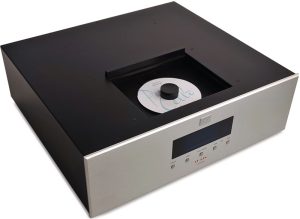
Audionote (UK)CD4.1x ($12,000): In my recent talks with Peter Qvortrup, head of Audionote UK, an Audionote CD4.1x is finally coming! Its inclusion will make my downstairs rig a complete Audionote system replete with Meishu Tonemeister Phono Silver Integrated ($19,300) and model AN-E/SPe HE monitor loudspeaker ($12,460 pair). The system is sublime, driven by the Rose 150b server/streamer, so I cannot imagine what awaits me when the CD4x.1 arrives. (Clement Perry)
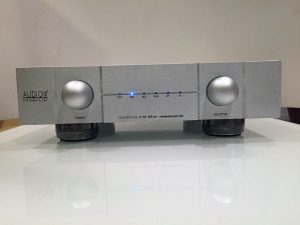
Audio Mirror Tubadour IV SE R2R Non oversampling Tube DAC with USB re-clocker ($3500/reviewed here): For the past couple of years, my DAC of choice has been the Denafrips Pontus II, a lovely R2R digital converter I reviewed in 2021 and subsequently purchased the review sample. Enter the Audio Mirror Tubadour IV SE, an R2R tube DAC… When compared, the Tubadour IV SE still bested my reference, effortlessly delivering warm and involving music. Well-recorded songs breathed with depth and a relaxed cohesiveness and alive with fleshy, detailed nuance.
I used the Tubadour IV as my primary digital player for everyday listening and reviewing. Over those 2023 reviewing months, the Tubadour IV SE proved a dependable and musical companion. The Audio Mirror Tubadour IV SE R2R Non-oversampling Tube DAC with USB reclocker is highly recommended! (Greg Voth)

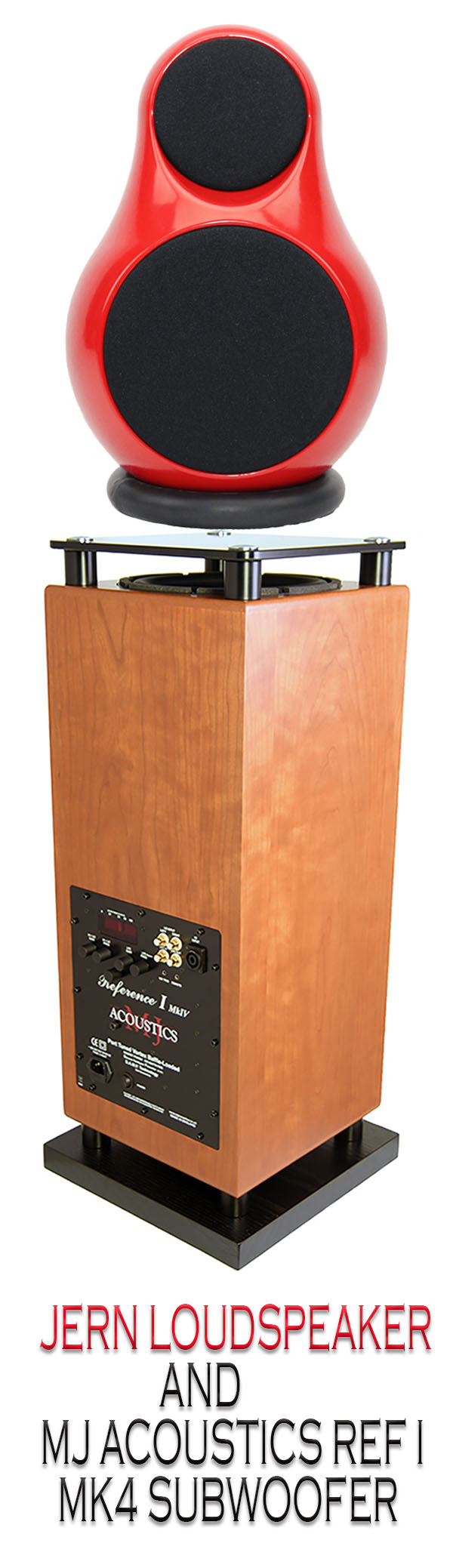
Jern Speakers 14EH, MJ Acoustics Reference I MkIV subs (Jern 14EH $5,000/pair, MJ Acoustics Reference I Mk4 Sub Woofer $3500.00 each reviewed here): Impressive, these cast iron monitors and tall sub-woofers. The JERN® 14EH and MJ Acoustics Reference I Mk IV’s sub-woofers integrate very well together – the 14EH’s present material cleanly, clearly, and almost ethereally free of box distortions and with a greater sense of air, transparency, and transient speed while the Reference I MkIV’s deliver fuller, denser and more interesting lower frequencies than that I’ve been accustomed to in my reference rig.
With the JERN® 14EH’s amp-friendly 8 Ohm load being less demanding, 87dB @ 2.83 V sensitivity, they should be able to respond with play with lower wattage amplification with ease (recommended power 25 – 150W / 8 OHM). In this pairing, the two brands sounded wonderful together. I’ll not soon forget the transient response, laser-accurate imaging, stunning stage depth, and low frequencies heard. (Greg Voth)
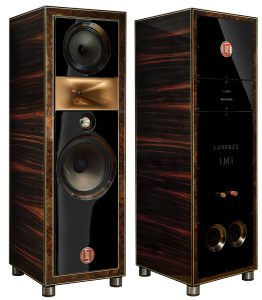
Lorenzo Audio Labs LM1 Loudspeaker ($199,000/pair): The exquisitely crafted, splendid-looking Lorenzo Audio Labs LM1 loudspeakers are visually stunning. They are a four-way design (one 16” woofer, one 11” midrange paper cone with alnico magnets, one 1” treble, and one 1” super tweeter compression driver with beryllium diaphragms) with phase-optimized crossovers. Their sensitivity is 96dB into 8 Ohm, should be compatible with any amplifiers, and has a frequency response of 20Hz to 35kHz. Each massive cabinet (441 lbs) is 62mm wide and manufactured with phenolic laminated wood and elastomer in constrained layers. It is covered with natural wood veneer and is 100% handcrafted by a fourth-generation craftsman whose family has worked since 1888 using legendary artisan techniques.
The LM1 sings like a canary with unmatched resolution and detail, and it reproduces a huge three-dimensional soundstage and powerful dynamics with great ease and is superbly natural sounding. Listening to vocals and strings was exceptionally engaging. (Key Kim)
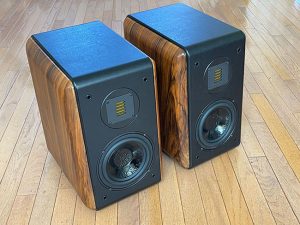
LSA Signature 60 Loudspeaker ($800 pair/reviewed here): Here, you have a well-built speaker with internal components and high-quality drivers, including an excellent AMT tweeter. It looks like a clone of a much more expensive Sonus Faber Electra Amator with walnut wood sides and slanted front baffle, top, and bottom covered in leather, and its performance level competes with stand mount monitors that retail for $3000, yet it sells for $800. It must be on this list for the best budget speaker of the year. (Terry London)
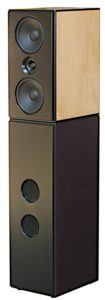
NSMT Loudspeakers – The System Two – Clairvoyant Monitor and Sub-Duo active band-pass subwoofer ($15,985/reviewed here): This four-piece, five-driver design excels at all the parameters that make a speaker create the illusion of musicians playing in the acoustic space in which they were recorded. System Two completely disappears in a vast, precisely layered sound stage, creates three-dimensional images, and beautiful tonality, and pressurizes the room with accurate extended bottom-end frequencies. I purchased the review pair. It replaced my reference of four years, the NSMT Model 100. The NSMT Loudspeaker -The System Two speaker is a bargain at its $15,985 selling point because the closet speaker I have heard equals its performance retails for $70,000. (Terry London)
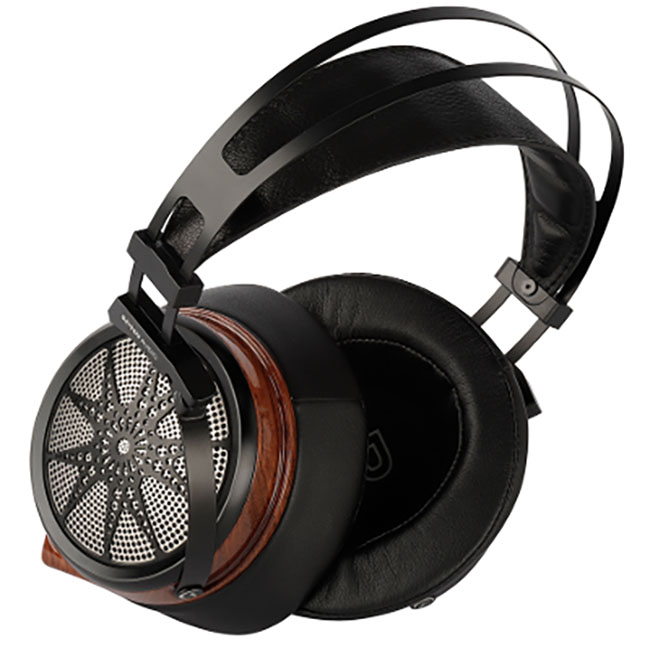
Sendy Audio Apollo Planar Magnetic Open-Backed Balanced Headphone ($499.99/reviewed here): The Sendy Audio Apollo is an immediately engaging headphone. Its lightweight design, comfort, and craftsmanship handily won me over. The Apollo’s large diameter diaphragm (68mm) and high-efficiency electroacoustic energy conversion delivered naturalness, musicality, and drive, with soft, warm vocals, solid bass with depth, not bloat, and the clean, clear detail and transparency that I crave.
The Apollo is CNC sculpted, with gloss-coated solid rosewood side components, lamb skin covered, soft and supple ear cups and headband, and decor, with steel mesh and sunlight design that reflect the model’s name. Even better, the Apollo is exceptionally comfortable for extended listening sessions. Its ear cups are bowl-like and can fit over the whole ear with no pressure on the ear. I can attest to this, as I wear them for hours daily. Besides the Apollo’s affordability, what stands out is that the Apollo design includes a balanced listening option. The Apollo is my daily go-to. (Greg Voth)
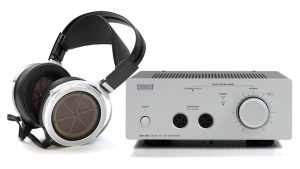
STAX SRM-700T Hybrid Electrostatic Headphone Driver ($3,400) and SR-009S Electrostatic Headphones ($4,545): I decided to invest in high-end headphones and a headphone amp. Upon researching/inquiring about which brand or model to invest in, giving the Stax models an audition was highly recommended. Having been in the business for a long time, I immediately recognized the Stax name due to its long-standing reputation for performance and quality. I eventually purchased the Stax SRM-700T Hybrid Electrostatic Headphone Driver (essentially a headphone amp) and the Stax SR-009S Electrostatic Headphones. At first, I was hesitant about what I would experience since I had only listened to my Beats headphones connected wirelessly to my iPhone. I was told to prepare for a different experience while listening to audio through high-end headphones. The Stax combination is world-class, and my perception of adding them to my system has changed. The Stax headphones were a very comfortable fit around my ears. I could hear every detail of the music: warm tones, extended bass, and wide soundstage. In other words, the music-listening experience was exhilarating. I would never claim it is better than listening to the output of my audio system; however, when I want to hear every audio detail from the music source, the Stax amp/headphone combination is unbeatable. (Moreno Mitchell)
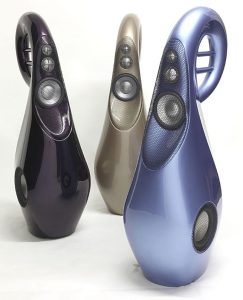
Vivid Audio Giya 3 Series 2 ($43,000/pair/reviewed here): With its distinctive styling and appearance, the Vivid Audio Giya 3 Series 2 loudspeaker provides a compelling and highly musical product, loaded with innovative engineering and technology embedded in its somewhat unusual design. It’s a form-follows-function approach with the sonic results displayed with superb musicality. Importantly, with its full-range capabilities, placement in the listening room requires tweaking to get the full measure of the magic these speakers can provide. Also, with a unique combination of solid dynamics across the entire frequency spectrum, combined with a level of refinement and finesse, the Giya 3s deliver a beguiling presentation that lures you into blissful listening and enjoyment. The tonality that comes from these speakers is very neutral, including a sense of organic warmth, fullness, and completeness, especially with vocals sounding authentic and very convincing. Regarding the soundstage dimensionality, there is excellent depth, width, height, and layering. This is the crowning glory of these loudspeakers with an open, holistic, wrap-around presentation. The bass is solid, full, warm, and organic, extending downward easily. The transition from the lower frequencies to the midrange and higher frequencies is seamless and comes forth superbly. A noticeable see-through quality enhances this loudspeaker’s ability to disappear as the sound engulfs the listener. Compared to the excellent Vivid Audio Kaya 90, and due to a number of the drivers being the same and quite similar, the Giya 3 Series 2 possesses much of the basic sonic character of the lesser-priced model and, at the same time, clearly extends the musical magic to a higher level and in a convincing manner. Review pending. (Bill Wells)
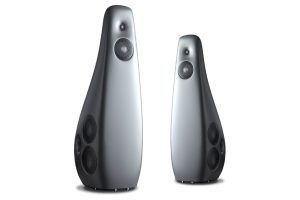
Vivid Audio Kaya 90 Loudspeakers ($28,000/pair/reviewed here): One of the more musically engaging full-range loudspeakers that I’ve had the opportunity to audition and review, the Kaya 90 punches all the right buttons in terms of both audiophile expectations as well as music-lover demands. Also, as with many high-resolution speakers, the Kaya 90s reveal the quality of the electronics and cables that pass along the signal to them. Sonically, these speakers provide a life-like musical presence that is captivating and provides the ty
Stereo Times Masthead
Publisher/Founder
Clement Perry
Editor
Dave Thomas
Senior Editors
Frank Alles, Mike Girardi, Russell Lichter, Terry London, Moreno Mitchell, Paul Szabady, Bill Wells, Mike Wright, and Stephen Yan,
Current Contributors
David Abramson, Tim Barrall, Dave Allison, Ron Cook, Lewis Dardick, John Hoffman, Dan Secula, Don Shaulis, Greg Simmons, Eric Teh, Greg Voth, Richard Willie, Ed Van Winkle, Rob Dockery, Richard Doron, and Daveed Turek
Site Management Clement Perry
Ad Designer: Martin Perry
Be the first to comment on: Stereo Times’ Most Wanted 2023