

LAiV Harmony µDAC and DDC – An Exercise in Effortless Musicality

Now that I’m older, wiser (perhaps?), and fully retired, I’ve been spending more time than ever perusing audio happenings online. Recently, I became particularly focused on updating my knowledge base regarding DACs. For most of my adult life, vinyl has been the heart of my system. LPs were more pleasant sonically and more emotionally engaging than most digital I encountered firsthand. Therefore, about 75% of my listening time was spent on analog. While the other 25% tended to involve me complaining about digital glare, digital hardness, digital edge, etc, let’s say digital, and I have had some unresolved issues.
As funds came and went over the years, they tended to go toward the analog portions of my system. The logic was that improvements elsewhere in the chain would positively affect the sources and improve the quality of the whole system—including the digital stepchild.
Don’t get me started on how many comparisons I’ve made of power cords, speaker cables, interconnects, power conditioners, and tweaks. How much time do you have? I’ll spare you. Let’s say I’ve put in the 10,000 hours – or close to it.
Digital—at least my digital—tended to be less satisfying. That’s being kind. It really got to the point that it was actively annoying me. There have been a couple of times I’ve shown up at Mr. Perry’s house for a listening session and had to warn him upfront that my ears were going to be unreliable that day—”a little beat up,” thanks to a combination of “a little too loud” and “a little too much digital.”
Recently, though, I could no longer tolerate the reality that the weakest component in my system was my DAC. Something had to be done!
For years, I’d been using an older Benchmark DAC1 HDR. Lately, though, the beloved pet of the early-2000s digital world was beginning to feel as modern as a flip phone. Highly thought of in its day (Stereophile Class A, if I remember correctly), but the time had come to find its successor.

LET THE HUNT BEGIN…
 As many of you have noticed, over the last 12 to 18 months, a new company has emerged on the scene: Laiv Audio. Why is everybody talking about them?? I had to investigate!
Value has always loomed large in my audio choices. So when this new company started popping up everywhere with word-of-mouth like “great for the money,” plastered all over YouTube, my ears perked up. As I browsed and re-browsed, I realized there were at least a dozen—maybe fifteen—reviews on YouTube alone. (Laiv’s website has many of them listed.)So I got to work: watching, re-watching, and re-re-watching. Yes, I really can’t buy anything without doing my homework. I was, after all, a purchasing agent for part of my professional life. Old habits die hard.
Much of the two cents I’m going to offer here is a distillation of what I absorbed from those reviewers, and how their impressions did—or did not—line up with my own once I had access to the products.
Another significant factor nudging me toward the digital realm: some health issues over the last few years have made the fiddling required for optimal LP playback much less appealing. Vinyl is demanding—setup, handling, cleaning, flipping, constant vigilance. It’s like caring for a high-maintenance houseplant that also weighs 50 pounds. As those health limitations set in, I found myself turning to digital more often—not because it was better, but because it didn’t require stretching, bending, brushing, dusting, and praying. I even dipped a toe into streaming, but that’s a story for another time.
And this—sacrilegious as it may sound—has me toying with the idea of liquidating my vinyl collection and related components and funneling that money toward digital. Toying! I’ll keep you posted.
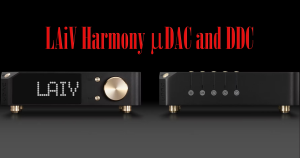
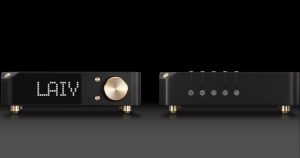
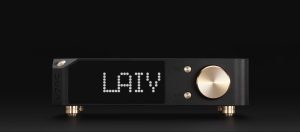
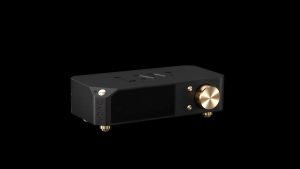
With all of this swirling in my head, I approached Mr. Perry about reviewing some Laiv Audio products. He graciously agreed. Shortly thereafter, I had the LAiV Harmony µDAC and DDC in my hands.
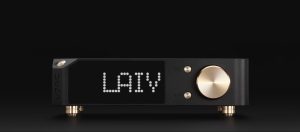
Here’s my take

The overwhelming consensus among YouTube reviewers was that the LAiV Harmony µDAC is one of the best-performing DACs in its price range ($994), with some claiming it rivals DACs costing several thousand dollars. If I heard it once, I heard it eight times from eight different reviewers: if this DAC wasn’t the best in its price range, it was undoubtedly among the top two or three.
Of course, “best” is contingent on each listener’s unique tastes. Everyone needs to review the reviewer to figure out whether their tastes align, at least somewhat, with your own. When that happens, you’ve found a worthy guide. And wouldn’t you know it: my tastes line up with about 97% of what these guys had to say.
So, what do I have to say?
Let me cherry-pick a basket of the most salient descriptors that reviewers consistently used—and that spoke directly to me: lack of digital glare; lack of hardness; organic; musical; quiet; refined; exceptionally dynamic; punchy and involving; tonally rich and natural; smooth and organic without being syrupy; and last but not least, analog-like.
This, of course, was floating my particular boat.
What I went on to learn was that Laiv prefers R2R ladder DACs versus the more common chip-based types. The adjectives above are far more commonly associated with R2R. Chip-based DACs, stereotypically (yeah, I’m really stretching metaphors here) measure better but are often thought—at their worst—to be colder, harder, leaner, and fatiguing. Just the attributes that have been wearing on me for years (I’m looking at you, Benchmark).
I also learned that the microDAC shares some very key electronic DNA with its big brother. It uses the same R2R ladder modules and FPGA processing found in the full-sized, more expensive LAiV Harmony DAC ($2,700). This trickle-down approach is like finding out your Toyota Corolla secretly has a Lexus engine.
Through judicious paring, Laiv has brought the price to nearly one-third of its big brother’s, yet its essence remains.
Everyone who has heard both acknowledges that the big brother is better, but the micro is the bigger bang for the buck.
Interestingly, I was about halfway through writing this review when I noticed that Stereophile had just published a review of this DAC by none other than Herb Reichert (one of my favorite reviewers—and I know I’m not alone). I think it’s safe to say Herb was gushing, in his inimitable way, about this DAC. I highly recommend reading his thoughts and those of the others I’ve cited. The best thing I can offer here is the benefit of my research and how it shaped my experience.
I selfishly initiated this review to make headway in choosing my next DAC. But since my generosity knows no bounds, I wanted to share my thoughts with you.
What have I learned?
The bottom line is that R2R DACs are probably the right technology for my taste. Granted, there are other players in this price range that may be worthy, but I’m going to lean on the logic that I’ve done my homework. I’m using the scientific method and embracing the preponderance of evidence that’s hard to ignore.
I’ve come to know these reviewers—as best one can from a distance—and I trust what I’ve learned from them. So I’m unhesitatingly going to say that my next DAC will be from Laiv.
My only concern about making that proclamation is…
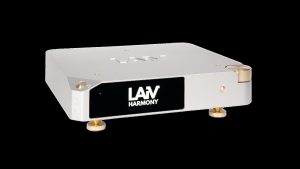
Should I get the big brother??
It’s the only hesitant thought nagging at me. Is this the right time for me to make a bigger move?? I want to get one in my hands for analysis.
Wish me luck!
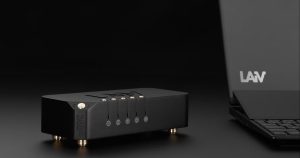
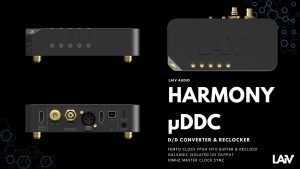
Oh yeah, the DDC…

Again, I’m leaning on the research I’ve gathered from online reviewers. Many of them used the DDC with the microDAC and—unsurprisingly—reported consistent listening impressions. Virtually everyone felt the DDC improved and elevated almost every aspect of the microDAC’s performance. Just as they heaped praise on the DAC, most agreed the DDC was a positive addition. I’ll temper that by noting that the enthusiasm wasn’t quite as uniform as it was for the DAC. The question wasn’t so much about sound quality as whether the $849 price represented good value. Many—though not all—felt it was worth it. That makes sense to me, and being value-conscious, I started a little biased against it.
I’ll share my own personal reaction by highlighting a description one reviewer beautifully laid out—the one whose impressions mirrored my own almost exactly. Srboljub from iiWi Reviews poetically described how, upon introducing the DDC, the sound became cleaner and perhaps leaner, with the sense that the space between images on the soundstage had been vacuumed of dust that previously obscured clarity. The relaxed ease—already evident—was magnified. This ease and clarity led to a deeper appreciation not only of obvious details but also of the smaller “critters” that occupy the stage: the echoes and reverb trails that help form the illusion of music unfolding right in front of you.
He, like me, noticed how the soundstage expanded and the images upon it grew. What I like to call “bigification.” For those of us not in huge rooms, this is always welcome. Not only that, the DDC elevated the sense of image dimensionality. The magic-trick illusion of 3D images right in front of you became more believable. Just more believably palpable.
(Not to kick sand in its face, but this is yet another attribute my old DAC was seriously lacking.)
I could continue gushing, but I’ll close by highlighting that Srboljub observed his mind was made up not from prolonged listening to the DDC, but from what happened when he removed it. I heard it from him first, but it struck a resonant chord with my own experience. I placed it in and out, again and again, and it was clear to me that. “Once you’ve heard its impact you will want it.”
So, it’s obvious by now that this dyed-in-the-wool analog lover is incredibly pleased with the combination of these two products. Do your research—or rely on mine—but unless you’re willing or able to up the ante on your budget, this is a great place to be!

Specifications:
Price: $994.00
Chip: Intel Altera Cyclone FPGA
Clock: Accusilicon AS318-B Ultra-Low Phase Noise FEMTO Oscillator
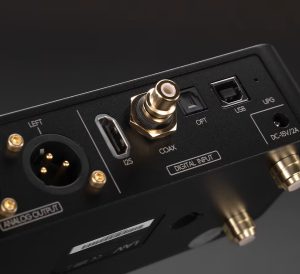
Digital Inputs: 1 x USB, 1 x Optical, 1 x Coaxial, 1 x I2S
Analog Outputs: 1 x XLR, maximum at 4 Vrms, approx. 82 Ω
Supported Formats (Input dependent)
USB: PCM:44.1kHz – 768kHz | DSD: DSD64 – DSD256
Optical: PCM: 44.1kHz – 192kHz | DSD: DSD64 via DoP only
Coaxial: PCM: 44.1kHz – 192kHz
DSD: DSD64 via DoP only
I2S: PCM: 44.1kHz – 768kHz | DSD: DSD64 – DSD256
Frequency Response: 20Hz – 20kHz, within ± 0.25 dB
THD+N: 0.006 %
Crosstalk: ≤ -120 dB
Signal to Noise Ratio (SNR): ≥ 125 dB
Dynamic Range: ≥ 110 dB
Features
Sleek & Compact design
NOS / OS Mode
Display brightness, delay dim, and delay off
8 x I2S Mode with Laiv product auto-configured
I2S clock supported
Galvanic isolation for enhanced signal purity
LAiV Harmony R-2R ladder network architecture
Discrete class A output buffer.
Controls: Remote control | Front panel
Power: 15VDC / 2A, DC 5.5/2.5 mm female.
Power adapter with interchangeable plugs
Website: laiv.audio


Stereo Times Masthead
Publisher/Founder
Clement Perry
Editor
Dave Thomas
Senior Editors
Frank Alles, Mike Girardi, Russell Lichter, Terry London, Moreno Mitchell, Paul Szabady, Bill Wells, Mike Wright, and Stephen Yan,
Current Contributors
David Abramson, Tim Barrall, Dave Allison, Ron Cook, Lewis Dardick, John Hoffman, Dan Secula, Don Shaulis, Greg Simmons, Eric Teh, Greg Voth, Richard Willie, Ed Van Winkle, Rob Dockery, Richard Doron, and Daveed Turek
Site Management Clement Perry
Ad Designer: Martin Perry
Be the first to comment on: LAiV Harmony µDAC and DDC – An Exercise in Effortless Musicality