

AXPONA 2017: Clement Perry
Chicago, May 2017
For the record, I had no intentions of attending this year’s AXPONA. The reason is that it’s just too close to the Munich High End show, which always drains all my energy in May. However, after learning that a few close friends were attending and that brothers Dave Thomas and Mike Wright live in Chicago, I simply couldn’t help but surprise them.
I’m the one who got surprised!
Based solely on the size of previous AXPONA shows (based on my last recollection), this should be easy to waltz through in a day. OR SO I THOUGHT. This year’s show was an absolute shocker for me since it’s my first time back in the Windy City in over a decade. I had no idea AXPONA had grown so enormously. The sheer number of rooms and their overall magnitude overwhelmed me, even though I was only there for a day. This show’s expansiveness makes the Denver Audiofest, my favorite US audio trade show, look like a walk through the park. I know the Windy City is a hustle-and-bustle town, rich in its history and home to great sports legends, but I had no idea that the world of high-end audio had decided to name Chicago AXPONA home sweet home.
If memory serves, I remember AXPONA NYC in Manhattan in the spring of 2011. Thought that was a decent show. Why they never returned and hit pay dirt in the Windy City is a mystery to me (especially as a NYC native). I just thank God for Bill Wells, who also attended previous AXPONA events and knew what to expect. I did not. His show coverage is as insightful as it is informative. It is good enough on its own. However, given the size of this event, I had to include some of the interesting rooms he missed and that I thought were both inviting and offered outstanding sound.
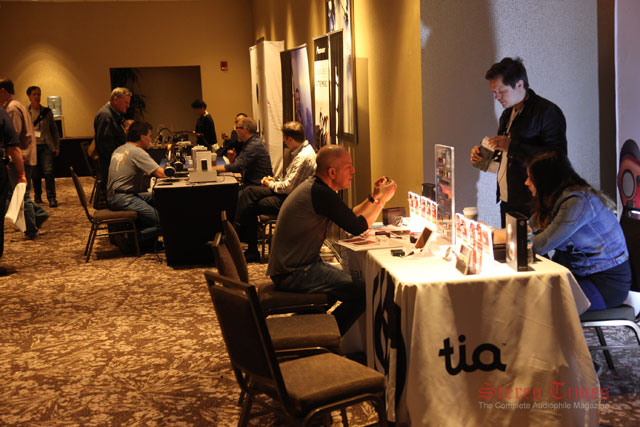
Fortunately, I did have my big, heavy Canon 5D mk4 camera and sort of walked the show haphazardly (12th floor one moment, basement the next) – going wherever my instincts, unusual-looking products, and familiar faces led me…


The first person I saw outside of the hotel having a stogie was Acoustic Zen designer Robert Lee. Later, I caught up with him in his suite, posing proudly beside the marvelous-sounding Crescendo 3-way loudspeaker. Lee is a great guy who just so happens to make a great loudspeaker.

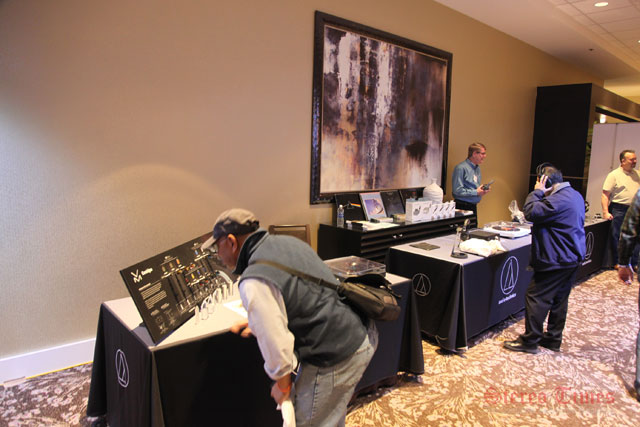
Frank Doris of Frank Doris Public Relations (top photo) is most certainly a familiar face. He was proud to show off the latest high-performance headphones, turntables, and electronics from the affordable brand Audio-Technica. What caught my attention were the ATH-DSR9BT ($599.00) and ATH-DSR7BT ($299.00) Bluetooth-equipped headphones. Audio Technica’s new AT-LP3 Direct Drive Turntable ($279.00), serves as a easy choice among budget-minded audiophiles. It combines outstanding sound with elegant design and advanced features. The AT-LP3 comes standard with Audio-Technica’s AT91R Dual MM cartridge and features a built-in switchable moving-magnet/moving-coil phono preamp. It’s available in black or white to complement any audio system and home décor.
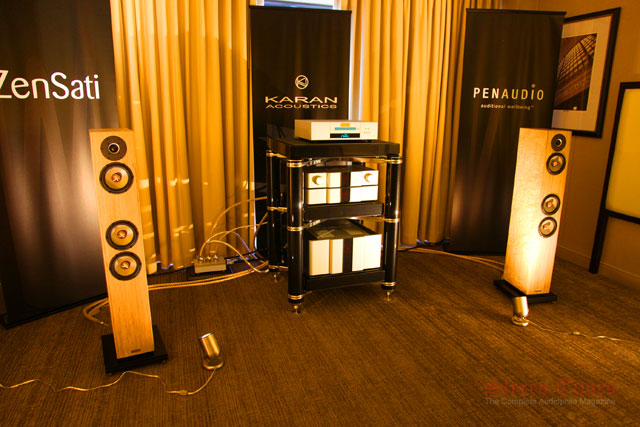
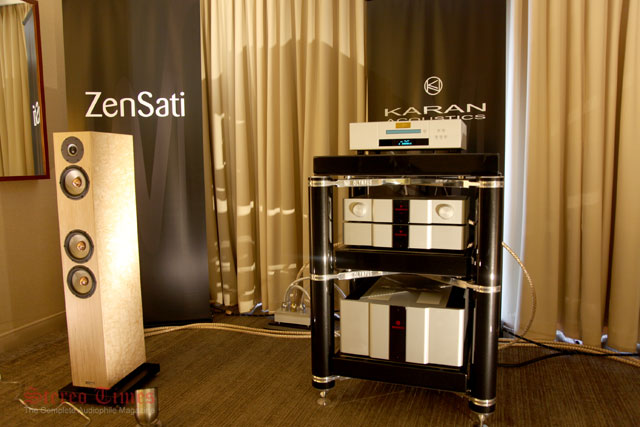
Was pleasantly surprised to see Wynn Audio now handling the US/Canada importation of Karan Acoustics electronics, including the Karan Acoustics L Ref Preamp ($17,000) and Karan Acoustics S 600 stereo amplifier (Pure Class A Sliding Bias, 600W/8 Ohms, $30,000). Our own Key Kim called those products his reference for over a decade and never saw a loudspeaker they didn’t make sing. Glad to see them here at AXPONA being showcased alongside the rare and beautiful Goldmund Eidos 36U+ CD Player ($32,000) and Penaudio Serenade Signature ($12,000). Ancillary equipment included ZenSati Seraphim cabling and a quite impressive, well-built Critical Mass Systems Olympus isolation platform (the latest model/top-of-the-line, first time showing in North America, price TBA).
Look who I ran into on my way to audio nirvana…
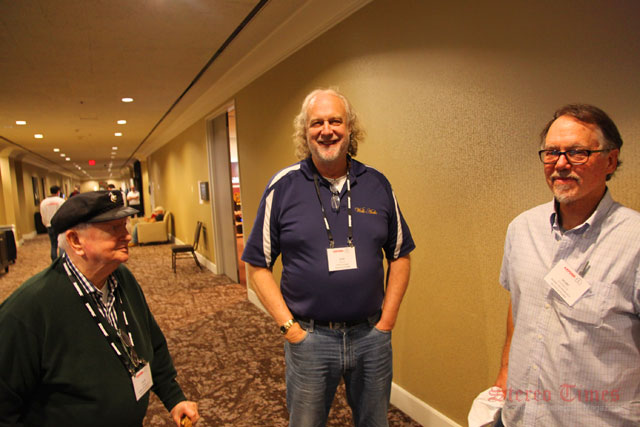
(L to R) Jack Bybee (left), big Jeff Wells of Wells Audio, and Bybee’s nephew Marc Stambuch (who’s helping Bybee through all his business now that he’s fastly approaching 88 years of age). Bybee, a retired physicist, is the consummate tweaker who still has a million ideas up his sleeve for enhancing one’s audio system. Trust me, I’m quite grateful lately after hearing and experimenting with his Active Room Neutralizers (reviewed here).
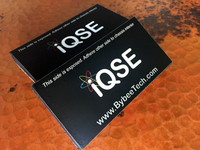 Bybee’s latest invention, called Internal Quantum Signal Enhancers or iQSE’s, is a totally passive device and I personally believe is his greatest invention thus far. My reason is simple: it’s only $150.00! The Bybee iQSE is small (4″ w x 2″ d x 1/2″ h), and designed to be installed inside an audio component via double-sided tape. Keeping it as close as possible to your component’s internal circuitry helps reduce unwanted energy fields that can negatively affect the signal. Because no soldering or other electrical connections are required, A/B’ing the iQSEs is a cinch. The results proved staggering after placing a pair inside the Laufer Teknik Memory Player and one inside each of my Behold BPA-768 amplifiers. It’s an overall balanced improvement across the board, but in my humble opinion, the improvements on piano and the human voice are substantial. The sound (especially that plinkety effect from the piano), is more resonant: has more fundamentals. High frequencies boast greater expression and appear clearer, airier, and more articulate. Bass, believe it or not, is more taut and thus quicker and less rubbery-sounding. As of right now, Bybee is selling out before he can make them. The reason is obvious: they’re affordable and what they do for the money is really quite remarkable.
I visited Chicago native and long-time friend Ezra Hartsfield on Saturday night and surprised him with 16 iQSE’s I purchased from Bybee (four for myself and the rest for other tweakers here at ST). For the record, Ezra is not a tweaker and has no tweaks whatsoever in his expansive, well-laid-out listening room. After experimenting with and installing about 8 iQSEs in his system, I had to fight to retrieve them! Ezra went bananas over the improvements, with them installed on the outside of his components: to avoid being too intrusive, they were placed atop his Laufer Teknik Memory Player and DAC, and on the terminals of his Sonus Faber Lilium loudspeaker. I was informed that Ezra’s son installed four iQSEs: two in his DAC and a pair inside the Memory Player. Ezra, too, is convinced that these are the real deal. Consider this only a tease, as many reviews are coming your way… so please stay tuned (or, better yet, order yourself a pair with a 30-day money-back guarantee from the Tweekgeek).
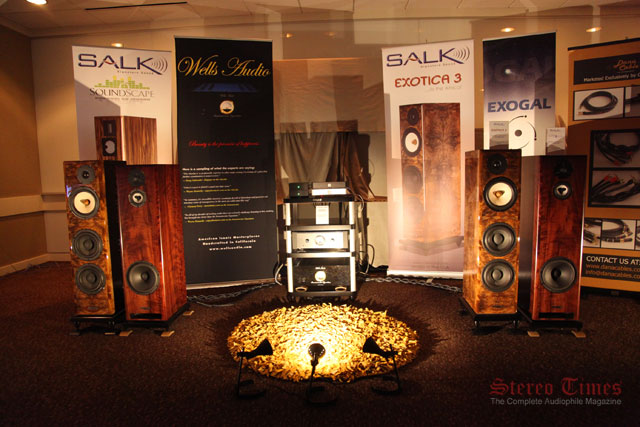

The SALK suite always produces a sound that belies their look, build quality, and asking price. This year, Jim Salk featured his SALK Exotica 3 (left: $12,995/pr), the affordable Song3 Encore loudspeakers ($3,895/pr), and his Gen III SALK StreamPlayer ($ 1,695.00). Both loudspeakers were driven by the fabulous-sounding Wells Audio Inamorata Signature stereo amplifier ($15k reviewed here). Jim Salk used all Danacables throughout the system in addition to Gingko Audio products (also reviewed here). Bybee AC conditioning was also responsible for the fabulous resolution and exquisite three-dimensionality evident across a variety of musical genres.
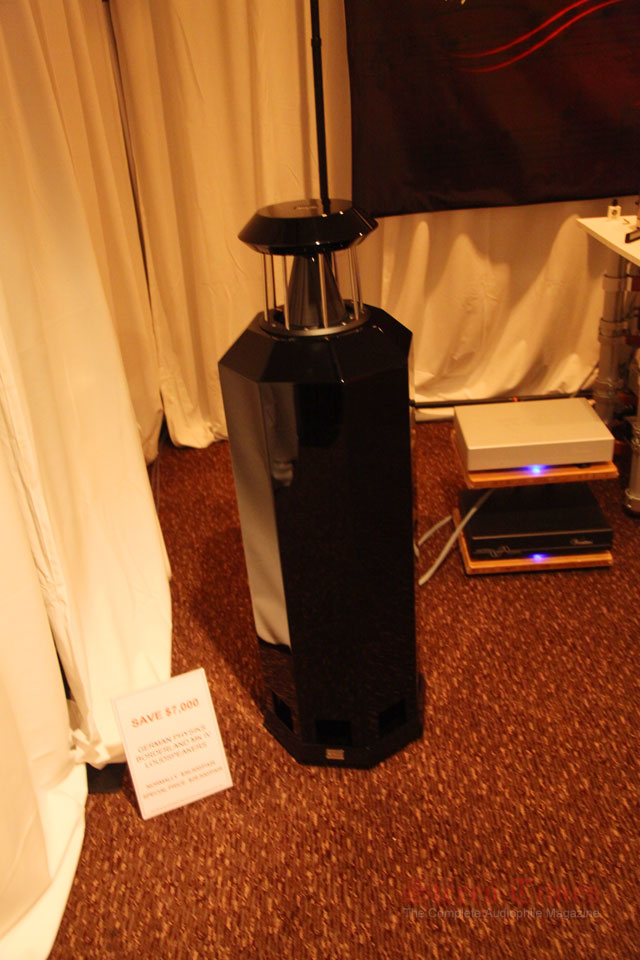

Distinctive Stereo owner Larry Borden (yes, that Larry Borden) showed up in grand style at this year’s AXPONA. Handling all U.S. sales on German Physiks, which includes the awe-inspiring Borderland Mk IV ($36,500). Merrill Audio’s Veritas mono amps ($12k), Christine pre ($12,400), and Jens phono stage ($15,500) complemented a nice front end that featured the VPI Reference Avenger turntable with JMW 12″ arm and Lyra Delos cartridge ($26,500). I’ve always been a fan of German Physiks, and here again was a perfect example of why: the sound is open; you can sit anywhere in the room and get the same focus as you would in the sweet spot. The low-end is rich, quick, and goes deep only when needed.
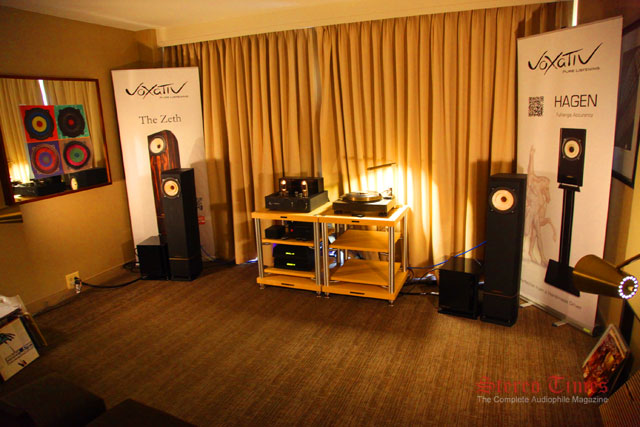
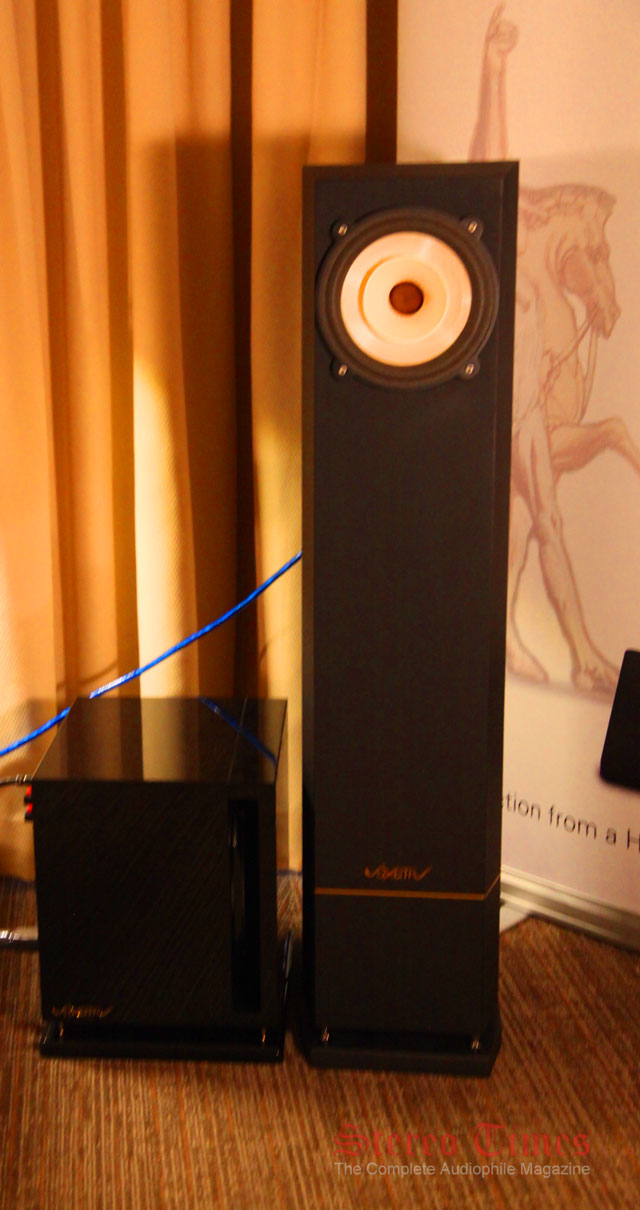
It was nice to see Holger Adler of Voxativ, Berlin, Germany, here in the USA for a change. I always admired their products, and this time was no exception, as they exhibited their new Zeth loudspeakers with the Z Bass system driven by their T-211 integrated tube amplifier. Analog play was compliments of the Lyric Audio PS 10 phono stage and Fern & Roby turntables.


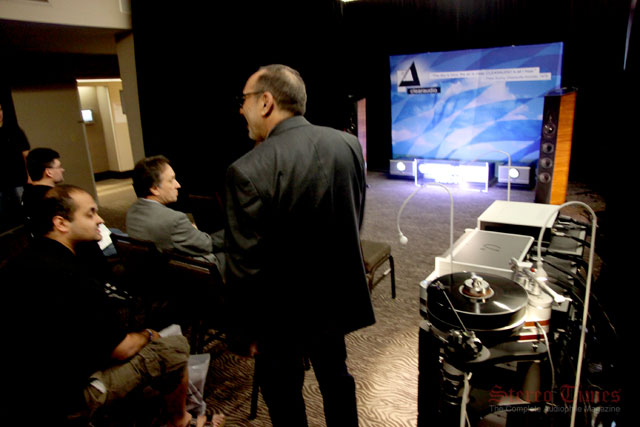
Quintessence Audio, another Chicago-based high-end retailer, and Garth Leerer of Musical Surroundings pulled out the big guns at this year’s AXPONA. Featuring Pass Labs, Audio Research, Clearaudio and, a big surprise for me, was to see and hear the all-new Sonus Faber 3.5-way Cremonese and Lilium loudspeakers. Always fascinated by this gorgeously designed Italian transducer, I couldn’t get a full grasp of it because of all the traffic. However, I did get a chance to visit my good friend Ezra later that evening to hear his pair of Sonus Faber Lilium loudspeakers, and I came away convinced they are quite well-made and have all the finesse needed to qualify as special.
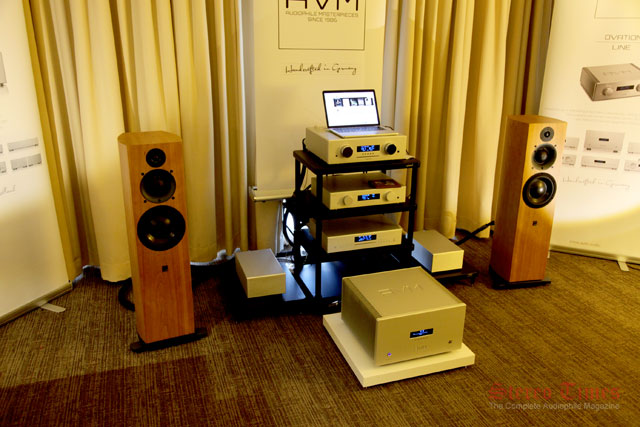
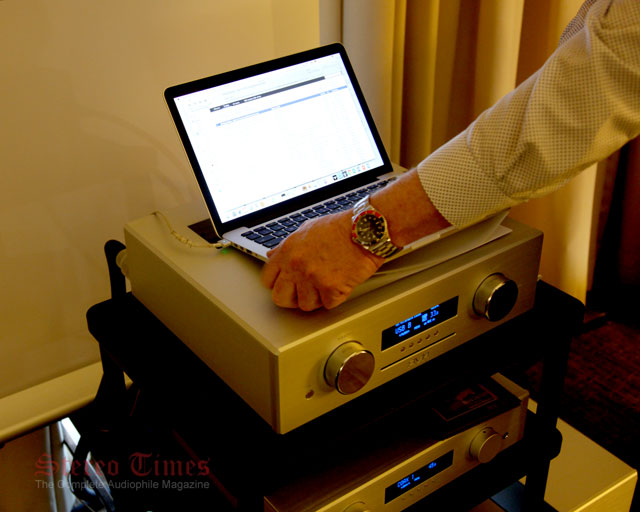
It was nice running into Peder Baeckman of AVM Audio on this side of the Atlantic for a change. I usually see him at the Munich High-End show each May. AVM is a German brand of high-end electronics that, both Greg Voth and I recently discovered, really, really sounds good. We’ve had some of the AVM gear in for review and were surprised that it performed above what we expected, given how much we expected. Super smooth, yet detailed and non-fatiguing. On display above was the AVM CS8.2 Ultimate All-in-One receiver ($12,995), AVM MA3.2S Mono Blocks ($5500.00), AVM SD3.2 Streaming Preamp ($4495.00), AVM MP3.2 Streaming Media Player ($4795.00), and AVM SA8.2 Stereo Amplifier ($14,995) (in the front). All spent equal time driving a pair of ATC 40 passive monitors with grace, ease, and an overall quality that belies its asking price. No, AVM isn’t cheap, but the good news is: it performs above, way above its asking price.
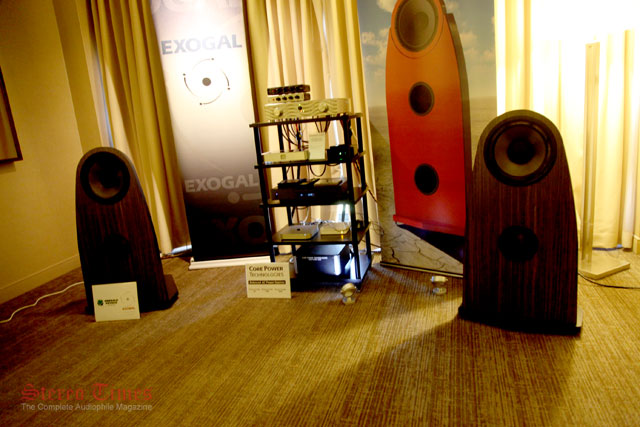
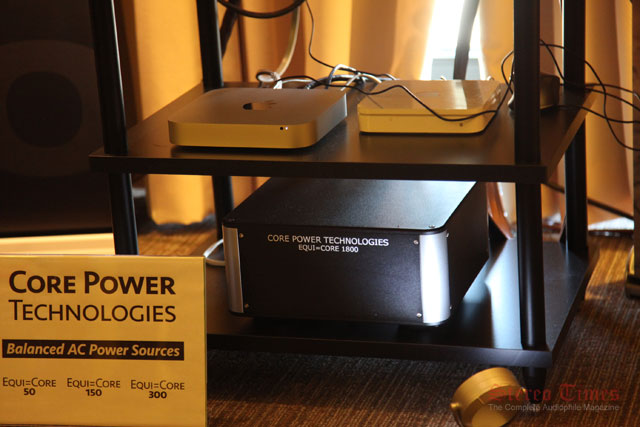
The lovely Emerald Physics loudspeakers set a very high bar for sound quality per dollar, says Dave Thomas and Greg Voth (read their reviews here). And it’s always good to see them in a trade show, considering how affordable they are and how good they sound. However, the newly released EQUI=CORE Balanced AC Power Source takes the EP’s sonics even further. Not a “Conditioner” per se, EQUI=CORE’s topology takes incoming 120 volts and converts it into 2 x 60 volt “legs” OUT OF PHASE to one another and thereby eliminating all of the Common Mode Noise. In the average system, this can translate to a 12-15 dB improvement in Signal To Noise. I’ll simply state this as Good Science. A well-designed Balanced AC is FOUNDATIONAL to a great system – it simply works. I have one in my office system, composed of the sweet-sounding Cherry Maraschino amplifier, a matching DAC, KEF monitors, King Sound electrostatic headphones (H03), and a headphone amp. The sound of my headphones has never sounded this detailed and elegant, while also weightier and denser. I’m a believer and couldn’t recommend the EQUI=CORE any higher and like the Emerald Physics, it’s affordability (starting at $799.00), makes it a no brainer.
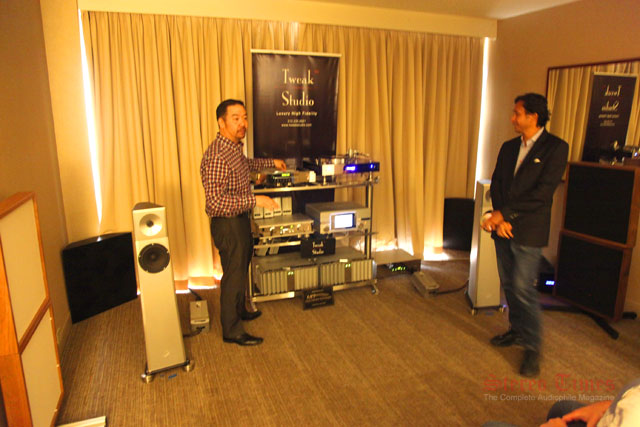

Chicago-based high-end importer Arnold Martinez, owner of Tweak Studio, put on quite a nice sonic treat for visitors. An entire Burmester system was on display, including their model 077 Preamplifier ($69,000), 911 Mk III Monoblocks ($35,000 ea.), Musiccenter ($55,000), model 089 CD Player ($35,000), and model 948 AC power conditioner ($10,000). Analog was via a Thorens TD550 Turntable ($12,500), Acoustical Systems Aquilar tonearm ($9,500), and Acoustical Systems Archon Cartridge ($3,295). All cabling used was by MIT Oracle series: MA-X XLR interconnect ($12,999), Oracle MA-X Rev2 XLR interconnect ($17,999), Oracle MA-X SHD XLR interconnect ($21,999), Oracle Reference power cable ($1,399), and Oracle Matrix Super HD 120.2 Speaker Cable ($29,999). The excellent YG Acoustics’ Carmel floorstanders ($24,300) were used – seemingly throughout the show! STILLPOINTS’ Aperture panels and Aperture Stands ($10,784) and the ESS 42-40-3 Rack ($29,950) were also used in this exotic setup. I imagine Martinez didn’t have to travel far to get this rig warmed up and ready to go, because the sound was ever-so clean, inviting, and airy, while those Carmel’s simply morphed into the walls and disappeared. Impressive setup.
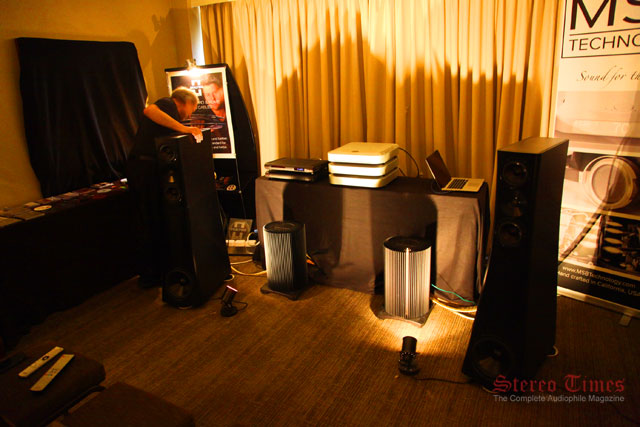
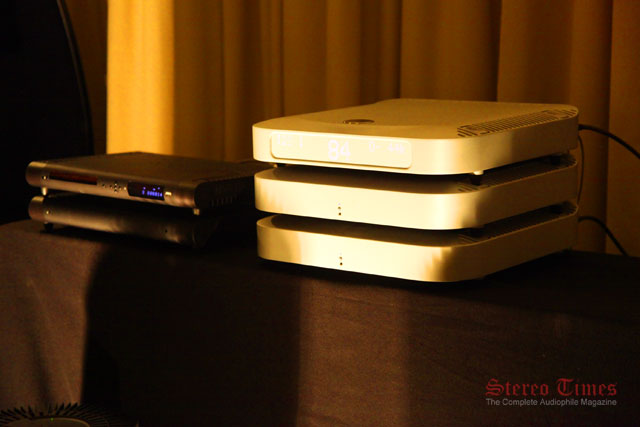
Another room that instantly caught my attention was the MSB suite. Their Platinum 3-tier DAC and transport make a strong case for choosing analog over digital. I wouldn’t be afraid to throw in their amplifiers either, as they might be a sleeper. Heard an earlier model in a friend’s home and thought these were among the best amplifiers to have ever graced his listening space: fast, clean, and weighty but nimble. Yes, they were quite impressive!

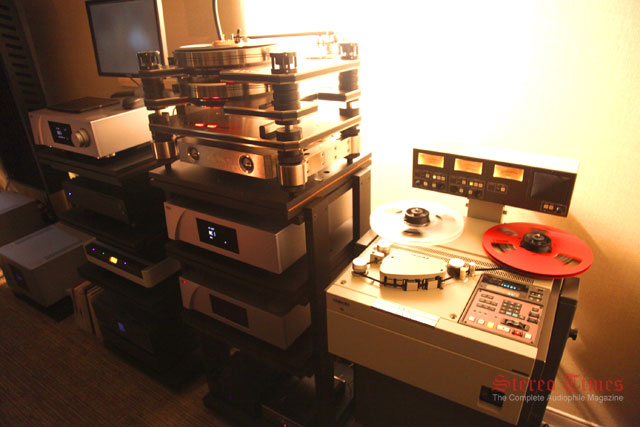
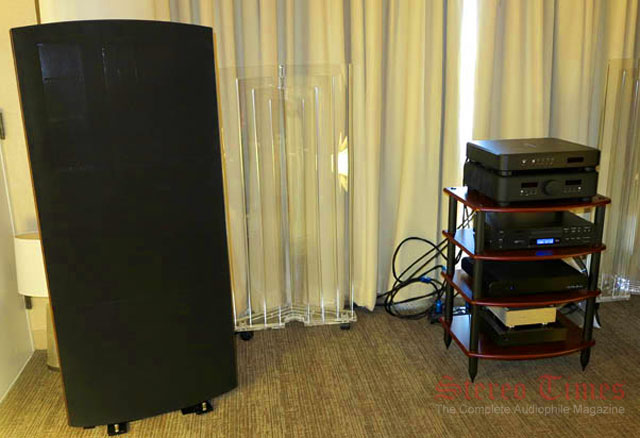
I’ve always admired how Magico sets up their rooms at trade shows. Notice, there’s no equipment between the loudspeakers? Helps create a much better sonic effect, especially for show-goers who are hearing them for the first time. The first thing I noticed when I sat and listened here was that the space seemed bigger, stretching farther in all directions, and felt more open. Is my imagination running wild? Could be, but this art form is also about creating the right illusion. Magico makes a great loudspeaker, but it has an added advantage based on its room setup.
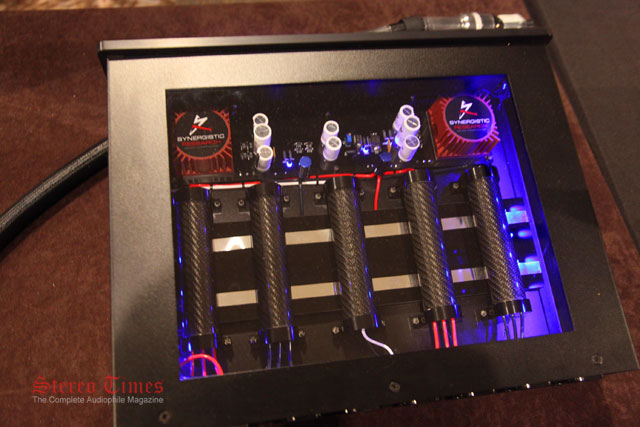
Ted Denney, president of Synergistic Research, put on an eye- and ear-popping demonstration featuring his new top-of-the-line PowerCell 12 UEF SE.
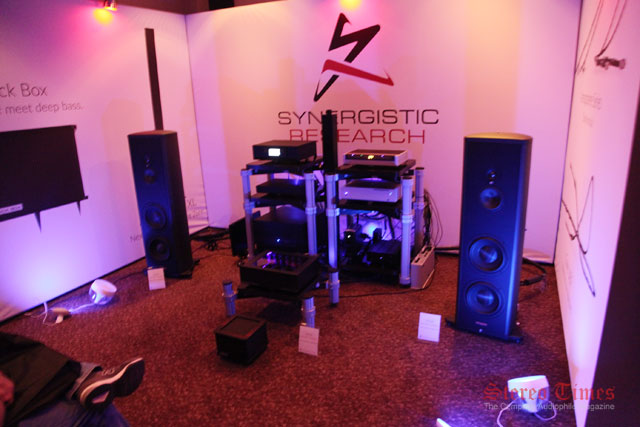
Ted Denny, CEO of Synergistic Research, was kind enough to personally conduct an A/B demonstration that consisted of turning off/on SR Tranquility Bases, SR Atmosphere XL, and changing broadcast scenes on the SR Atmosphere XL. Lastly, his A/B test of the SR Black Boxes, by physically removing them from the room, really impressed me. All in all, it was impressive, easy to distinguish, and very impressive. Hoping to get my hands on a pair this summer for review. Stay tuned!
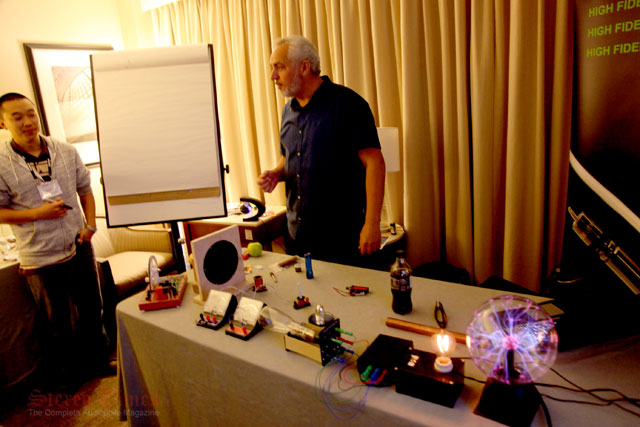
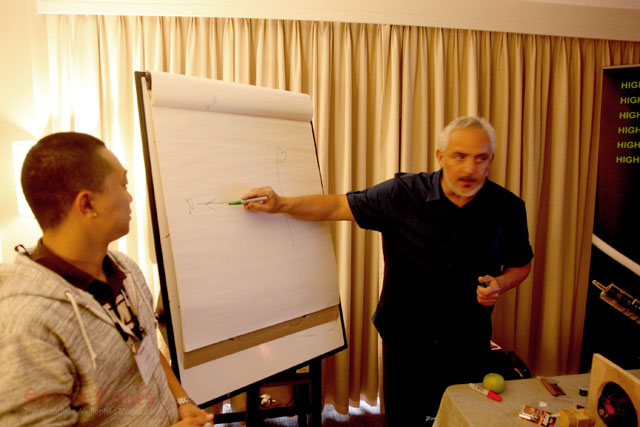
I was also surprised to see Rick Schultz, chief designer behind High Fidelity Cables, here at AXPONA. Schultz has found a unique way to manipulate electric current and has performed many fascinating demonstrations to prove that his cables not only work, but do so in a way others cannot claim. I love sitting in on his demos because they are quite interesting. So much so that I requested to try some of his products. Will let you know the results in the coming months.
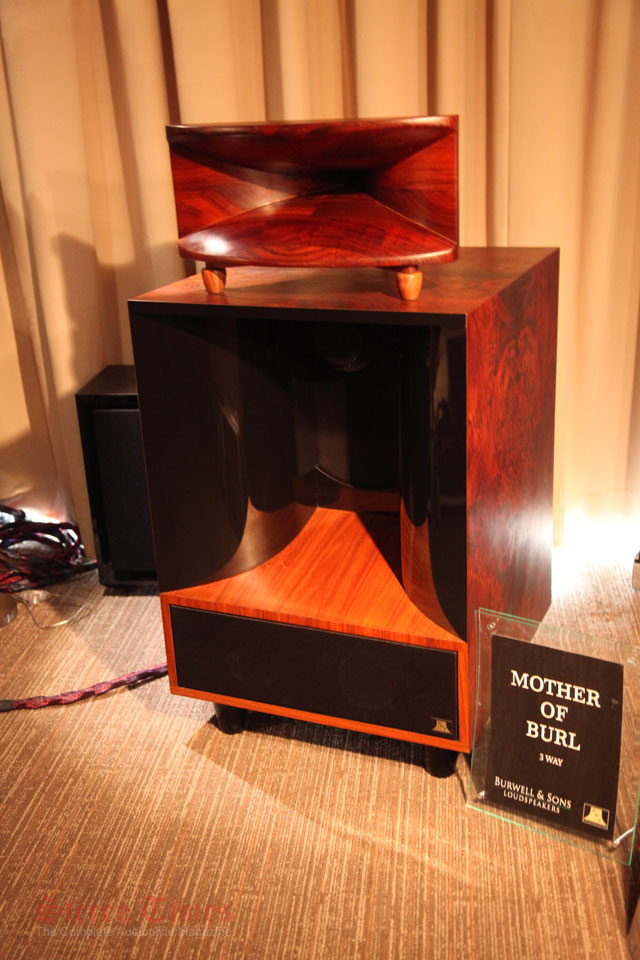
Burwell & Son’s Mother of Burl horn loudspeaker ($90k) was new to me in the audio scene. This horn transducer’s low profile created a dense, high-resolution feel to the music. However, its height (very low) allowed an unusual view into the music that wasn’t to my liking. The wonderful thing about horns is how infinitely adjustable they are. I bet they could have fixed the low-stage issue if I had mentioned it. Because I didn’t know the folks, I also didn’t want to alarm them about their personal preferences. I’m 6’3″, and maybe these were voiced for someone shorter than me. Hopefully, I’ll run into these guys again.
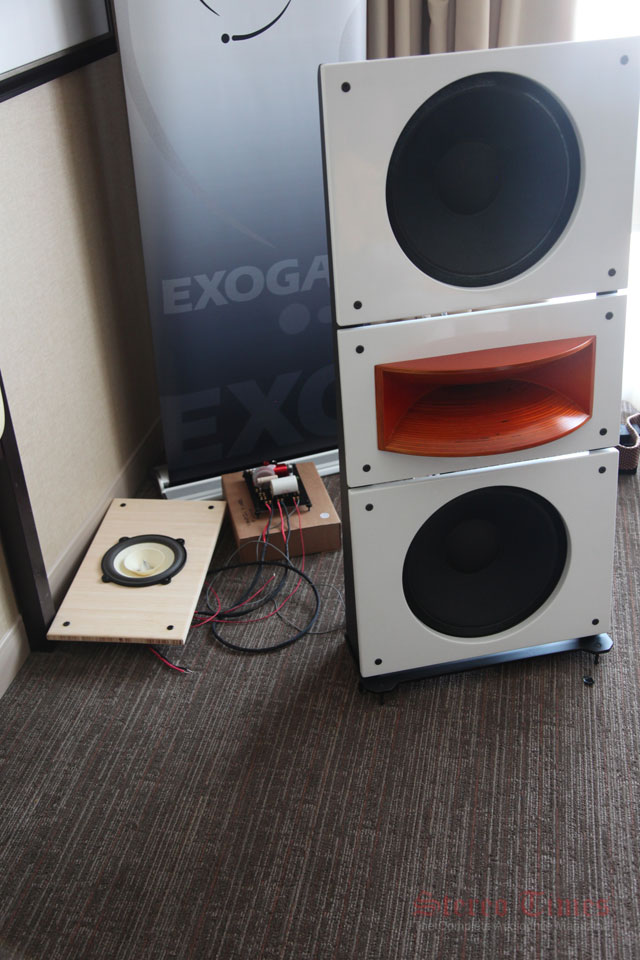
Modular and Open-Baffle designed loudspeakers are gaining notoriety here in the USA. Finally got the opportunity to hear them at AXPONA and thought they offered a wide-open window into the music. I expected them to be devoid of any coloration whatsoever and well balanced, but they exceeded my expectations. Our own Don Shaulis wrote in his review (here): “The PureAudioProject bridges the gap between pure DIY and completely hands-off prebuilt by shipping flat-packed open-baffle speakers which the buyer assembles. This results in providing drivers and crossover components at a level of quality unprecedented even at several multiples of the Trio10 MundorfAMT’s price. PureAudioProject removes the guesswork and provides the opportunity for audiophiles to be involved in creating speakers that out-perform speakers costing much more…”
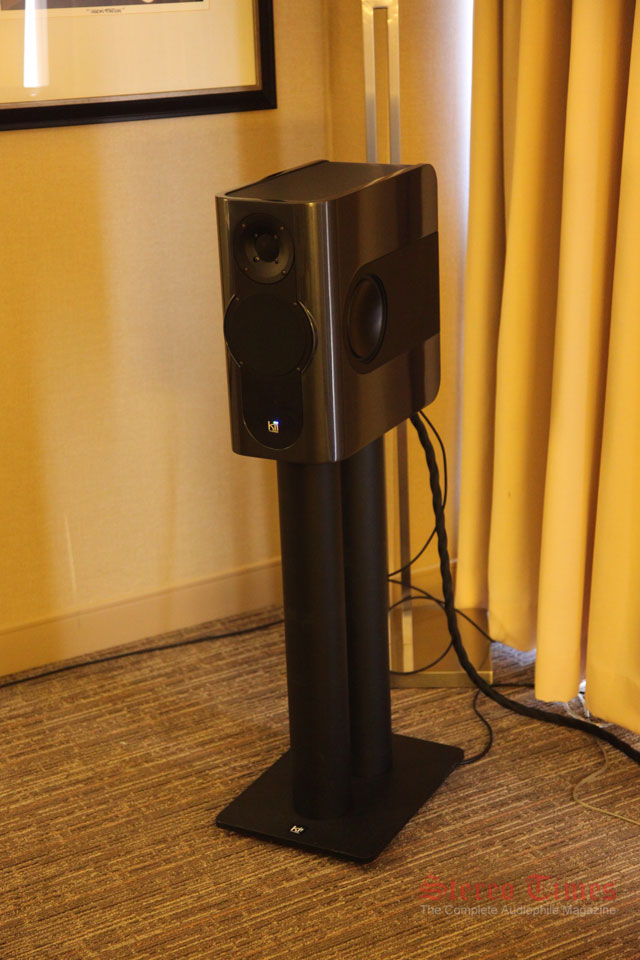
Ran into GTT Audio’s Bill Parrish once again, showing his Kii Three Loudspeaker System ($13,900). What always surprises me about this compact dynamo – besides its amazing ability to fill up a room despite its small size – is that it boasts six channels of DSP, D/A conversion, and power amplification all hidden behind its neat exterior. It’s products like these that amaze me more than the big guns, because I’m totally caught off guard and never expect much to begin with. Another one of those loudspeaker systems built for folks who enjoy music more than components.
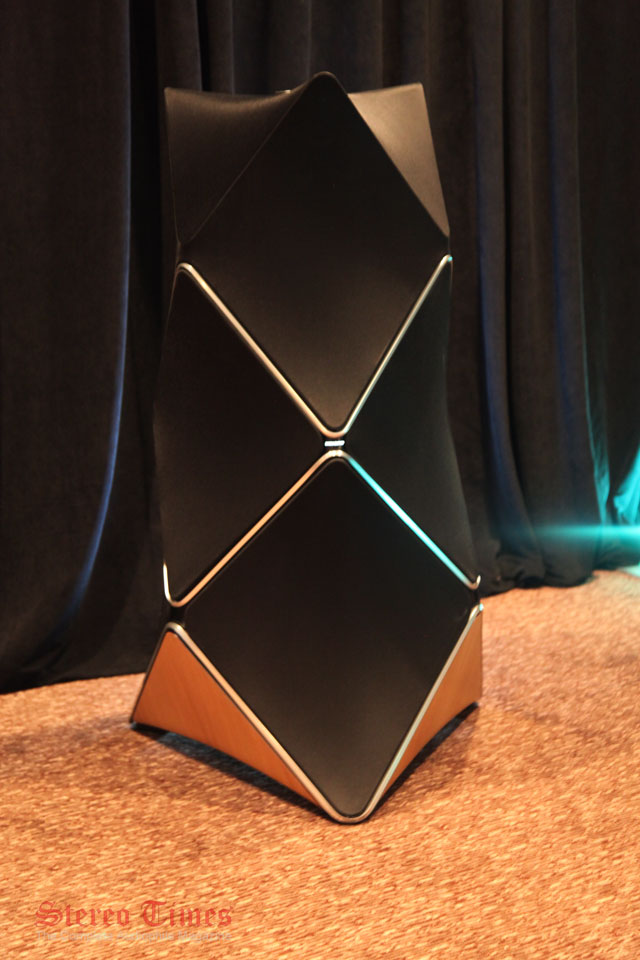
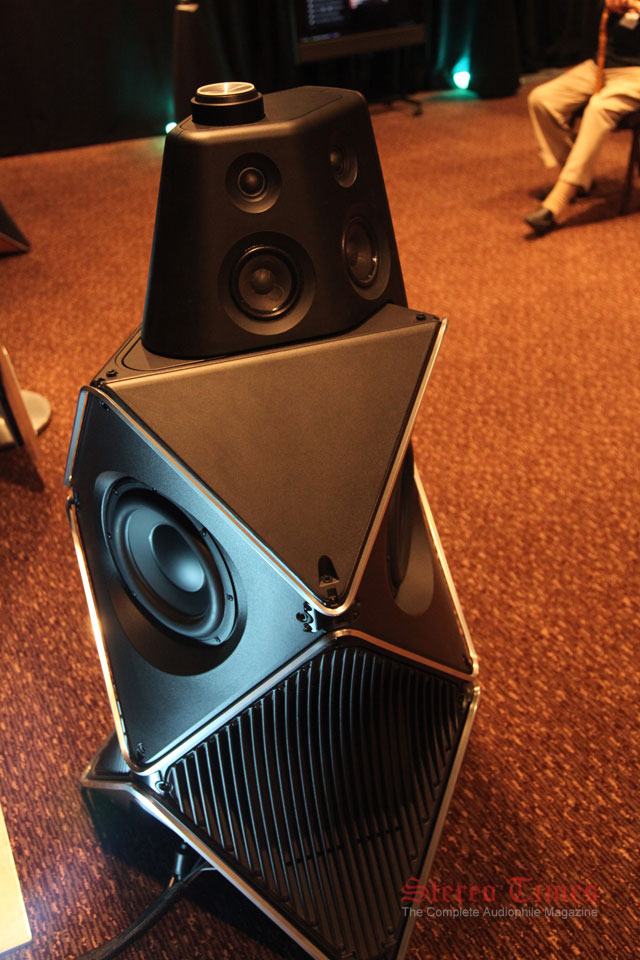
Glad I finally got a chance to hear the Bang & Olufsen BeoLab 90 active loudspeaker system. I also have to admit that I was blown away by a simple, casual presentation from a very young rep at B&O. So much so that I began to daydream about life with them. I then thought again of life without my system and quickly snapped back to reality. The thing is, while lost in their magic, I was enamored enough to daydream of what they’d sound like in my home. They seem to have enough dynamic headroom, with absolutely incredible dynamics, image specificity, soundstage, and depth that are beyond reproach.
This is a most unusual design, and its side-firing drivers are reminiscent of one of my all-time favorites, the legendary Audio Physic Caldera – except this is a self-powered design that claims a whopping 14 channels, using B&O’s own highly efficient ICE power amplification. Not just a few watts either. A whopping 8,200 watts of power per loudspeaker! This newest state-of-the-art speaker system features 18 Scan-Speak drivers placed in carefully defined locations and orientations to deliver maximum performance across frequency, time, and space.
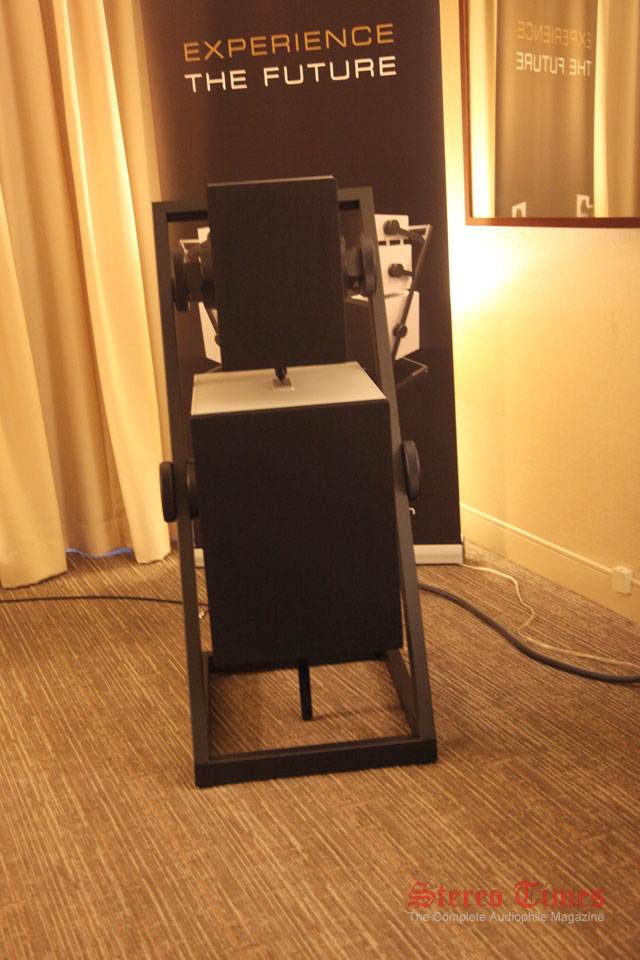
Manhattan audio retailer Bob Visintainer of Rhapsody Music and Cinema also handles Goldmund and, in particular, the Logos Sukha active loudspeakers. These $95k beauties, in addition to being self-powered, are also wireless: AC plug-n via a Goldmund USB dongle, and an iPad is all that’s required. Visintainer says the Aurender music server makes the Sukha sing. The sound here was impressively clean, open, and detailed with nary a hint of digititis. Not necessarily for the audiophile, but most certainly for the music lover. Make no mistake, there is a difference.
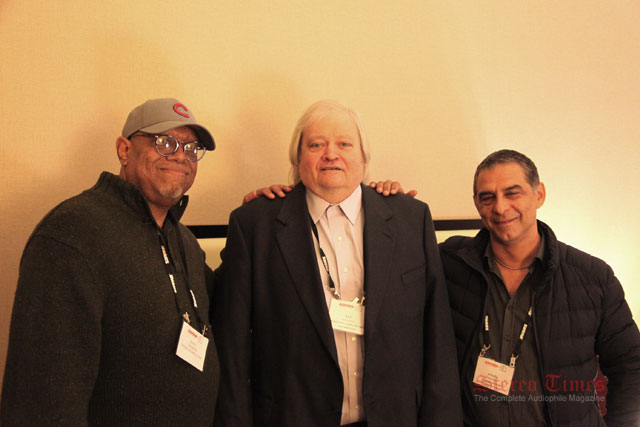
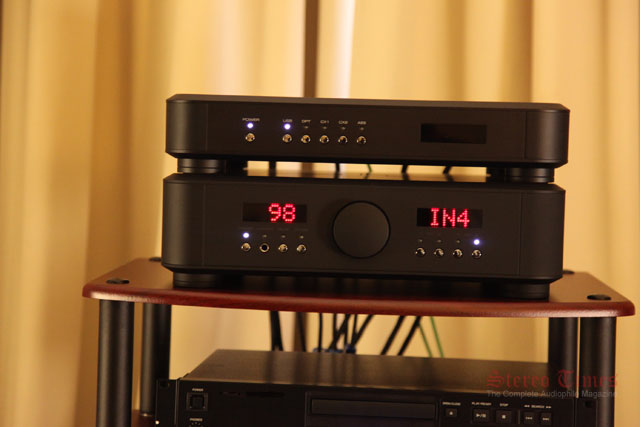
Dave has much to smile about since Jay Bertrand of Bertrand Audio Imports (center) offered him the chance to review the Virtuoso full-electrostatic panel loudspeaker ($12,500) from new Serbian ESL manufacturer Soltanus Acoustics. Dave gushed over this ESL’s lack of coloration and lifelike clarity compared to live recordings (see review here). I sat before these tall, slightly curved panels and felt that ESLs are among the most transparent loudspeakers on the market. Unfortunately, you have to live with their one shortcoming: low frequency limitations. However, the Virtuoso does provide enough low-end weight to create a don’t-give-a-damn attitude. They’re simply that good-sounding – especially when played through Angel Despotov’s (above photo right) German-built Analog Domain electronics that included his new model M-75 Integrated amplifier ($22k) and model DAC-1 digital to analog converter ($22k).
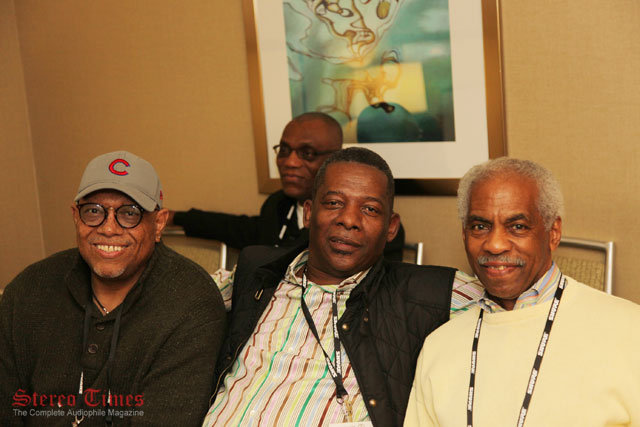
Dave Thomas and I finally caught up to Bill Wells (right) in Doug White’s The Voice That Is suite, which featured a near Tidal wave of electronics, in addition to their popular and fabulous loudspeakers. There’s Dynamic Design’s cable architect, Olu Sonuga, attempting to keep a low profile.
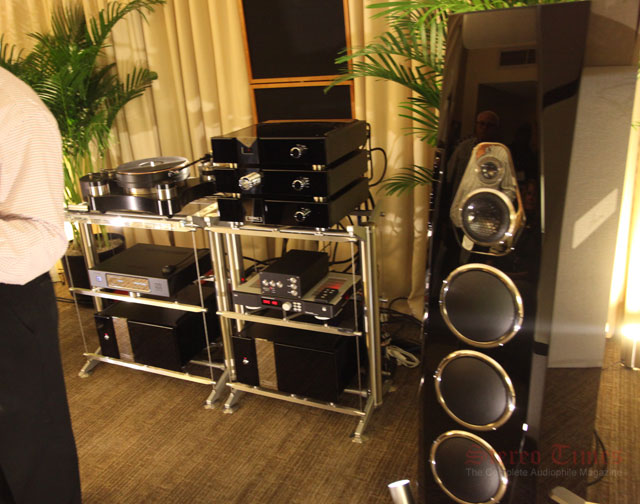

Doug White provided a wonderful, informal introduction to the components used in his room. The Tidal Presencio Preamplifier, Tidal Impulse mono amplifiers, and Tidal speaker cables and interconnects (AC cords were compliments of Olu Sonuga’s Dynamic Design Neutron SW16), for example. A TW–Acustic Raven AC ‘table with a Transfiguration Proteus MC cartridge kept the vinyl breathtakingly realistic and illustrated just how great sounding Tidal electronics are when paired with their loudspeakers.
I’m not talking about walking through the show, good sonics, blah, blah, blah. I’m talking about the kind of sonics that let you feel the music, not just hear it. It’s a rare occurance but you know you’re experiencing it. What’s more amazing is that this was achieved in a hotel room, not in a dedicated space or even at Doug White’s place, where I hear the system is MUCH better, says Bill Wells. My next trip will be there hopefully this summer. Lastly, digital playback was by way of the Bricasti Design Ml SE DAC and Aurender A10 Music Server perched atop an attractive Stillpoints ESS rack.
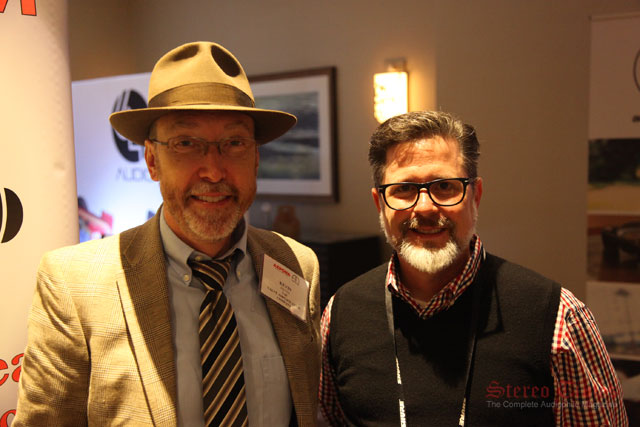
There’s Kevin Hayes of VAC in a fine fedora hat and Damon Von Schweikert in a well-manicured beard, welcoming me into their suite.
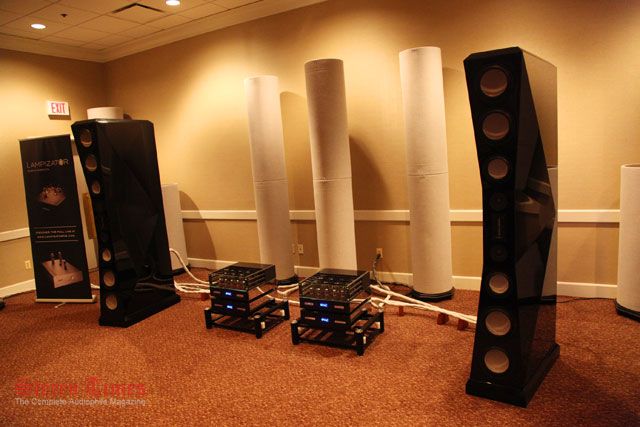
I didn’t get the memo! Is there a new sheriff in town? The VR ULTRA 11 loudspeaker looks like a declaration of war on anything less. This was my first time seeing or hearing about the latest and most auspicious design from Albert Von Schweikert. Massively built (in beautiful black lacquer) VR ULTRA 11 loudspeakers ($295k) actually look affordable, given the other overpriced models at or near their asking price. There’s so much to say about how impressive this loudspeaker is; I ask that you visit their website and read the specs for yourself. I’ll say this, however: I was astounded by the overall feel and sonics. I didn’t get what I expected from a large multi-driver setup, which created larger-than-life images. The VR ULTRA 11 has an intimate voice and only swells in size and scope when required. The VR ULTRA 11, strapped to the VAC 450 iQ Ref monos, ladies and gentlemen, was a soul-shocker! The quality it exudes is reserved for the best high-sensitivity horn designs. So, once again, I was startled by its unusual dynamic response, poise, and ebb and flow. But there was more…
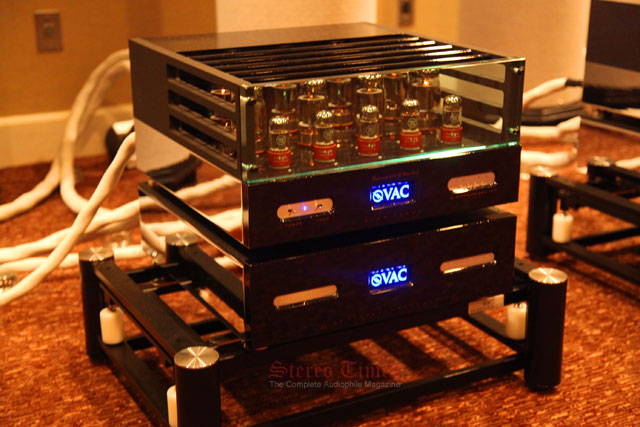
Kevin Hayes of Valve Amplification Company (VAC), was proudly showing off some super exotic designs that included his VAC Statement 450 iQ Monoblocks ($120k/pr) VAC Statement Line Stage ($75k) and VAC Statement Phonostage ($80k). Analog sources were via the Kronos Audio Pro turntable ($38k), Kronos Audio SCPS-1 Power Supply ($13,500), and Kronos Black Beauty Tonearm ($8,500), equipped with a ZYX Audio Ultimate 4D Cartridge ($4,400). Got a glimpse of an old, rebuilt (J-Corder) Technics 1520 reel-to-reel while digital came via the YFS Ref 3 Music Server ($17,500) and an impressive-sounding Lampizator Golden Gate DAC ($20k). Cabling throughout was via MasterBuilt Audio’s Ultra Line series ($195k), while the acoustic treatment used was the new IsoThermal TubeTraps from ASC ($26k). Equipment rested on the increasingly popular Artesania Audio racks from Italy (including the VAC Statement 450 iQ monos above).
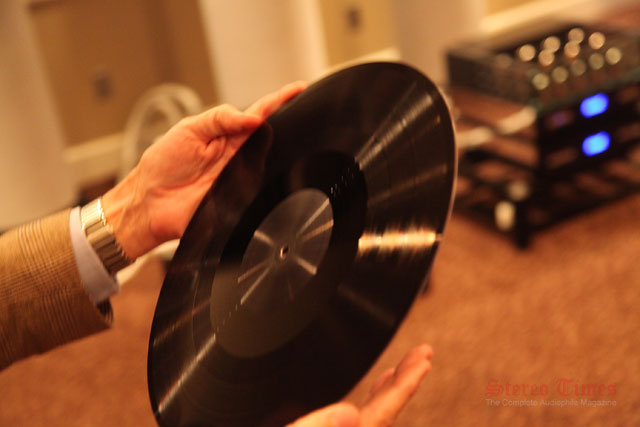
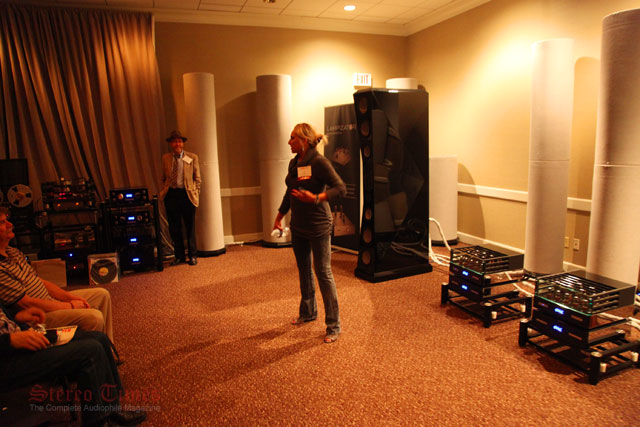 Live versus Memorex. While heading out of the room for lunch, I saw jazz songstress Lyn Stanley heading into the Von Schweikert/VAC suite. This was especially insightful because while playing one of her songs on a specially cut laquer pressing, Lyn also stood up and sang the same song live over the LP. No microphones. No specialized booth. Yes, she sang right over the music playing behind her. The system had an uncanny way of fooling you into thinking some live session musicians had joined in. The system – and that special laquer pressing – injected so much life into this recording, and Lyn made it appear even more realistic. Yeah, if you didn’t get the chance to hear this demo, then you missed one hell of a system. It’s easy to qualify this as the Best Sound at AXPONA, but when you look at what was employed here versus the competition, then it better had been BEST SOUND. When you start counting how much money went into this setup, then you’d expect greatness in a hurry. Unfortunately, setups this grand and outlandish rarely perform at this level. Fortunately for everyone who attended, this show was more than worth it. God willing, I look forward to including Chicago AXPONA in my future adventures.
Happy Listening!


Stereo Times Masthead
Publisher/Founder
Clement Perry
Editor
Dave Thomas
Senior Editors
Frank Alles, Mike Girardi, Russell Lichter, Terry London, Moreno Mitchell, Paul Szabady, Bill Wells, Mike Wright, and Stephen Yan,
Current Contributors
David Abramson, Tim Barrall, Dave Allison, Ron Cook, Lewis Dardick, John Hoffman, Dan Secula, Don Shaulis, Greg Simmons, Eric Teh, Greg Voth, Richard Willie, Ed Van Winkle, Rob Dockery, Richard Doron, and Daveed Turek
Site Management Clement Perry
Ad Designer: Martin Perry
Be the first to comment on: AXPONA 2017: Clement Perry