

LAiV Crescendo VERSE vs Harmony µDAC by Ed Van Winkle
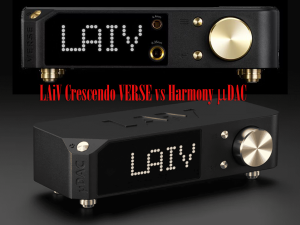
The Digital Path Back to Analog Roots (Continued):
 Despite all the talk about circuitry, jitter, or THD, the reason we’re Audiophiles is simple: we want to feel closer to the music. Closer to the performance—the subtle breaths between phrases, the shimmer of a cymbal’s decay, the 3D magic illusion of musicians performing right in front of you – making you forget that the world, outside your room, exists. Digital playback can be precise, clean, and technically astonishing—but sometimes it feels “surgical,” stripped of warmth and the organic nuances that make music feel alive. For someone whose ears were formed on vinyl, the continuing question becomes: Can a DAC give digital music the richness and harmonic completeness of analog?
On the first part of my journey (reviewed here), discovering the µDAC (and let’s not forget the DDC!) answered that question for me, with a resounding yes! On this next leg, I was determined to compare the LAiV Crescendo VERSE with the LAiV Harmony µDAC.
Though they are close in price, the Verse adds a couple more features that may or may not appeal to everyone. This is the crux of my comparison. To try and shed some light on the extent of the sound differential (If there is one??) and try to decide if the more robust set of features in the cheaper unit makes it a better value, which is always in the eye of the beholder, but let’s see if I can help make that process clearer. Both DAC’s share the same engineering DNA—discrete R-2R ladder architecture controlled by FPGA logic—but they express it differently. One presents music, at first pass, with the impression of slightly more high-frequency detail and snappier transients, coupled with versatile functionality; the other, relatively, emphasizes harmonic richness, tonal density, and dimensional space and imaging, appealing especially to listeners with analog-leaning ears.
After extended listening, the differences became both subtle and compelling. Both DACs are musical and engaging, but the µDAC feels more analog-aligned, more tonally complete, and harmonically satisfying. The VERSE, in contrast, initially impresses with energy and clarity but ultimately feels, in comparison, thinner in harmonic body. That said, its versatility—remote control, preamp functionality, headphone output, and more—means many listeners may value it more highly, even if its tonal character is not quite as full.
Listen, score, decide.
Ah, the joy of being an audiophile.
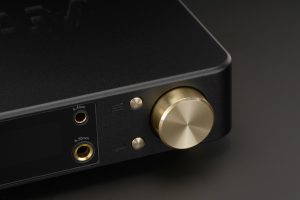
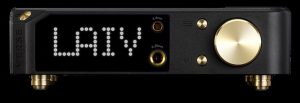
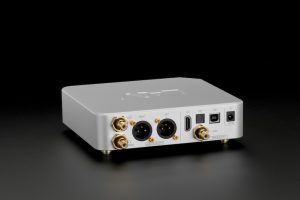
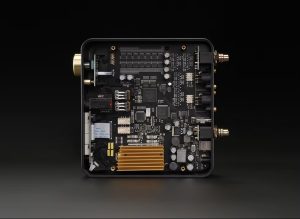
Crescendo VERSE: snappy and versatile
 The Crescendo VERSE immediately grabs attention. Its presentation feels lively thanks to relatively accentuated transients. On first listen, tracks feel dy
namic and
engaging: cymbals shimmer, guitar plucks snap, and drums feel crisp. This energy makes music exciting, especially during casual or quick listening sessions. Will that hold up in the long run?? Take “Take Five” by The Dave Brubeck Quartet from Time Out. At first, the ride cymbal practically leaps out of the speakers, the snare has a satisfying snap, and Paul Desmond’s saxophone dances, very cleanly, in front of the rhythm section. The initial impression is immediate engagement—the music feels lively and “jumpy”.
However, with deeper, focused listening, the VERSE begins to reveal some “relative” limitations. Its harmonic content is less dense, lighter, and less fleshed out. Additionally, the bass and piano feel comparatively flat. Where the µDAC allows subtle overtones to bloom and sustain, the VERSE can feel somewhat bleached out.
Its lively transients are fun, but they come at the cost of harmonic richness. (Not bad, just noticeably less good!)
 Vocals also illustrate this contrast. On “A Case of You” on Blue, by Joni Mitchell, her voice is clear and present, but the VERSE doesn’t fully convey the harmonic warmth of the accompanying piano or her voice. The performance is still enjoyable but lacks the depth and tonal saturation that emerge with the µDAC.
Yet it’s important to note that many listeners may love the VERSE for its tonality. So, this thumbnail sketch will be the first hurdle for anyone deciding whether my opinion might be useful to them, as it will be the overriding theme of my comparison. Granted, the Verse counters with more features, and that may, for many, push it ahead. Its remote control adds convenience, allowing easy volume adjustments and source switching without leaving the listening chair. Its preamp and headphone outputs provide system flexibility that the µDAC does not. In other words, while its transients and tonal character may not satisfy every purist, its practicality and all-in-one design could be compelling for those who value its versatility.
A large part of that versatility is the SRC (sampling rate conversion) settings, which can further enhance the clarity and detail on display. However, no matter what settings I used, it couldn’t overcome the basic tonal and dimensional differences between the two units, which, throughout my comparisons, remained, for me, the most obvious difference. And it wouldn’t allow the Verse to overcome the µDAC, for my favor.
Your mileage may vary!
Harmony µDAC: harmonically complete and analog-aligned
Switching to the Harmony µDAC, the tonal and harmonic picture becomes immediately more convincing. The, let’s call it, edge definition causing “jumpiness” of transients is replaced with cohesive harmonic bloom: cymbals shimmer more naturally, bass lines resonate with richer, more dimensional Images. Vocals float more warmly, more naturally, and with greater perceived dimensionality. Returning to “Take Five”, the cymbal decay lingers longer, drums occupy a more dimensional space, and the saxophone feels more physically anchored in the soundstage. The µDAC’s quieter background and lower haze allow micro-dynamics to emerge more naturally. Repeated listening rewards patience: the harmonic richness is sustained rather than momentary. This is where digital begins to feel analog—where tonal saturation and more realistic acoustic space combine to foster deep immersion.
Fusion exploration: Return to Forever – Romantic Warrior
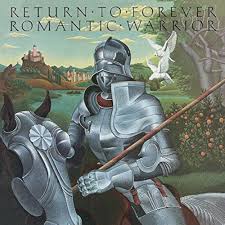 Return to Forever’s “Romantic Warrior” provides a particularly vivid example. The album is well recorded and harmonically and rhythmically complex, with intricate guitar runs, layered keyboards, and expressive bass passages. Through the VERSE, the initial impression is lively and engaging: Chick Corea’s keyboards sparkle, Al Di Meola’s guitar attacks are crisp, and Stanley Clarke’s bass lines snap with definition. The quickened transients give a sense of excitement and immediacy—the musical equivalent of that first cup of coffee in the morning. But deeper listening reveals that the VERSE is relatively thinner in tonal density. The keyboards and guitar lines, while articulate, don’t bloom as fully; the bass feels less textured than it could. To be sure, for some, its charm will be its energetic immediacy. The Harmony µDAC, by contrast, delivers better harmonic saturation. Corea’s keyboards bloom more naturally, Di Meola’s guitar lines retain bite but now sit with a warmer midrange glow, and Clarke’s bass resonates as a more dimensional, tonally fuller image. Dynamics jump out as rounder, fuller, less edge-defined, making for a more analog-like listening experience. Where the VERSE is fun and peppy, the µDAC is more emotionally and tonally satisfying, leading to longer, more satisfying listening sessions.
Micro-dynamics and transient nuance
 The µDAC excels at micro-dynamics. Subtle musical details—fingered strings, piano swells, harmonic decay—emerge clearly, without exaggerated attack but with more dimensional naturalness. Its transients are precise but naturally integrated, making fast passages engaging without losing tonal cohesion.
Why the µDAC feels analog-aligned: The design explains much of this. The Crescendo VERSE is multifunctional, serving as both a preamp and a headphone amp. That versatility is a major strength, but it means the DAC circuitry shares space and power with other components. The µDAC is a purist. It focuses exclusively on digital-to-analog conversion, enabling optimized power supplies, a quieter analog stage, and more faithful rendering of harmonic content. The result: tonal richness, dynamics with more fulsome power, and spatial realism that better echoes the analog listening experience.
Harmony DDC: refining the digital lens: Adding the LAiV Harmony DDC to the µDAC chain refines its natural strengths, regenerating the digital signal, stabilizing timing, reducing jitter, and allowing harmonics to bloom more fully. Reverb tails extend naturally, dynamics emerge more clearly, and instruments occupy space more convincingly. With the VERSE, the DDC improves air and openness, and although it helps, it cannot fully overcome the relative thinness of the harmonic content. Seeing a pattern? Have I hammered it home enough?
The µDAC + DDC combination remains the more satisfying path for those seeking tonal realism and analog-like presence.
Choosing your digital path: The Crescendo VERSE is engaging and versatile. Its peppy transients create initial excitement, its cohesive musicality makes listening enjoyable, and its features—remote control, headphone output, preamp functionality—offer practical convenience. Listeners who value this versatility and its energetic immediacy may prefer it. The Harmony µDAC, however, offers greater tonal completeness, greater harmonic richness, and greater dimensional space that reward careful, extended listening. In short, the VERSE is like a charismatic performer who immediately grabs attention. The µDAC is a masterful storyteller, gradually revealing the layers, subtleties, and tonal depth that make reproduced music feel more real. Your choice may depend on whether you prioritize feature versatility or pure sonic richness. For someone steeped in analog sensibilities, the µDAC tends to win the heart.
At least it has mine!
Wrapping it up
 After extended listening, the µDAC has clearly become my preferred path back to the analog world. Its tonal richness, harmonic density, and spatial realism bring digital playback close to the warmth and depth of vinyl.
The Crescendo VERSE remains highly enjoyable: energetic, engaging, and versatile, with additional features that some listeners will love. Its peppy presentation is fun, but over time, its harmonic body felt relatively thin compared to the µDAC. Pairing the µDAC with the Harmony DDC amplifies these strengths: space opens, dynamics shine, and the performance feels alive and dimensional. In the end, it’s not about numbers or specs—it’s about heart, emotion, and music that feels alive.
When the lights are low, and the music begins, the Harmony µDAC proves that digital can honor the analog spirit while rewarding patient listening with richness and depth that the VERSE comes close to but doesn’t quite deliver. Reflecting on my ruminations here, I’m not sure if I was portraying the Verse positively enough! Though it suffers in MY comparison…if it’s not crystal, CRYSTAL clear… I think it’s fantastic! And most definitely, it’s great for the money! Probably an even better value (for the right buyer) than the µDAC, and that is no small feat!
Laiv continues their winning ways!!

Stereo Times Masthead
Publisher/Founder
Clement Perry
Editor
Dave Thomas
Senior Editors
Frank Alles, Mike Girardi, Russell Lichter, Terry London, Moreno Mitchell, Paul Szabady, Bill Wells, Mike Wright, and Stephen Yan,
Current Contributors
David Abramson, Tim Barrall, Dave Allison, Ron Cook, Lewis Dardick, John Hoffman, Dan Secula, Don Shaulis, Greg Simmons, Eric Teh, Greg Voth, Richard Willie, Ed Van Winkle, Rob Dockery, Richard Doron, and Daveed Turek
Site Management Clement Perry
Ad Designer: Martin Perry
Be the first to comment on: LAiV Crescendo VERSE vs Harmony µDAC by Ed Van Winkle