

Tekton Design Ulfberht 15 Loudspeaker by Ron Cook
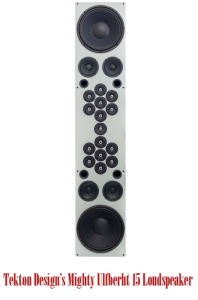
 Long-time readers of Stereo Times might recall that I wrote a review of the original Tekton Ulfberht loudspeaker nearly eight years ago (here). I purchased the original review pair and have been living happily with them for the past 7+ years. During that time, my admiration for and enthusiasm for the original loudspeaker continued to grow as I upgraded other aspects of my system, each upgrade improving on what I had originally reported about the Ulfberhts.
Recently, after conversations with Eric Alexander, the owner and designer of Tekton, I decided it might be time to try something new and ordered a pair of Ulfberht 15 loudspeakers. I was taking a bit of a gamble that this new version would be a noticeable improvement, so I held up on letting the original Ulfberhts go until I was sure it was the right thing to do. Turns out that, for me, it was the right thing, and my original Ulfberhts are now owned and being enjoyed by another audiophile who was, and is, totally amazed and enthralled by their performance.
This brings us to the subject of this review, the Tekton Design Ulfberht 15 (U-15s herein) and the unique challenges in writing such a review. In my system, the U-15s have built upon the impressive performance characteristics of the original Ulfberhts, and, in re-reading my review of the original Ulfberhts, I realized that many of my observations would still apply to the U-15s. For that reason, I will excerpt some of the original text for use in the U-15 review and indicate where this is done by using “quotation marks” and italics. Also, after installing the U-15s, I added my most recent component to the system, i.e., the Theoretica Applied Physics Bacch4mac Stereo-Purifier, which I also chose as my “Most Wanted” component for 2025.
DESCRIPTION
The following description of the U-15 comes from Tekton’s website:
- Made under U.S. Patent 9247339 with further patents pending
- Proprietary 4-way loudspeaker design
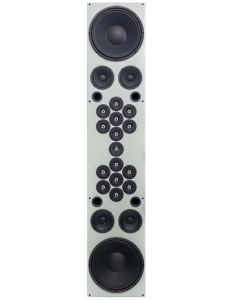
- Patented 15-dome radiating hybrid MTM high-frequency array
- Beryllium high-frequency tweeter
- Proprietary patent-pending 26mm 14 dome radiating hybrid midrange matrix array
- Four 6.5″ mid-bass patented ‘overtone & harmonic’ bass transducers
- New- dual 15″ subwoofers – purpose-engineered and designed for the Ulfberht
- 98dB 2.83V@1m sensitivity
- 4 Ohm design for optimum performance
- 20Hz-30kHz frequency response
- 1000 Watt power handling
- Weight 230 lbs
- Height 80.75″ (205.1 cm) x Width 16.0″ (40.64 cm) x Depth 17.0″ (43.18 cm)
- Manufactured in the USA
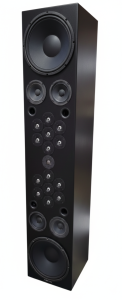
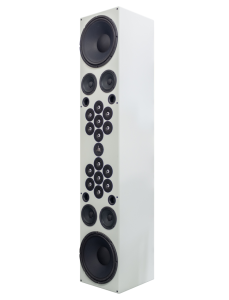
The physical appearance of the loudspeaker is very similar to that of the original, with the most obvious change being the larger 15″ woofer. That said, all the drivers are new in the U-15: i.e., the mid-bass units, the 14 ceramic drivers in the array, and the Beryllium tweeter. While the footprint is essentially the same, the U-15 is also several inches taller.
BACKGROUND
 As a professional drummer, I was particularly interested in the fact that Eric Alexander is also a drummer and that one of his goals is to get as close as possible to the sounds a real drum kit produces. The thump of a bass drum, crack of a snare, shimmer of cymbals, etc., are all part of that sound. While I’ve never heard any system capture a drum kit perfectly, Eric has come closer than most to reproducing a drumset’s dynamics and characteristics. To do this, his proprietary arrays of extremely low-mass drivers are designed to limit stress on each driver, significantly reducing (and, to my ear, eliminating) distortion at any volume and helping to create the dynamics and power of an actual drumset. I’m also particularly sensitive to cymbal sounds since I’ve been playing the real thing for over 60 years. In my system, the U-15s get closer to real cymbal sounds than any loudspeaker I’ve ever owned, and I’ve owned quite a few. Of course, the benefit of Eric’s design extends to all instruments and the human voice.
Regarding Eric’s design, in my original review, I mentioned: “When looking at the sight of 21 drivers per side, I couldn’t help but wonder if this loudspeaker could be coherent (the short answer is yes, with sound that seems to emerge from one large driver).” This phenomenon is still 100% true in the U-15s. Even more impressive is that a loudspeaker this large can literally disappear into the soundstage. On many tracks, if you close your eyes, you won’t be able to pinpoint the source of the sound. For that matter, I sometimes stare at the loudspeakers and STILL can’t believe the sound is coming from them. Amazing!

HOW THEY SOUND / LISTENING
“The Tekton Design Ulfberht loudspeaker seems to combine the best elements of various designs or types, e.g. the transparency and delicacy of electrostats, the dynamics and transient speed of horns, and, the silky-smoothness of the best cones. They also produce the lowest of the low bass with power, control, and room-rattling notes that you can feel as well as hear. All this, while producing an enormous soundstage within which the loudspeaker does the disappearing act of a mini-monitor. Image sizes are appropriate to the recording and/or sound sources (voices, instruments, etc.) and the speaker is capable of producing the full grandeur of a symphony orchestra on a scale that rivals the larger (and MUCH more expensive) loudspeaker designs available today.”………
 These words accurately describe the original Ulfberhts. That said, each of the characteristics cited above has been improved in the U-15s. Even before breaking in, it was pretty evident that the lowest bass notes now had greater power and slam. Recordings with really low bass (e.g., the track “Thanks To You” from the Boz Scaggs album Dig) had much more authority, with an intense bass that literally shook the room and made you feel as well as hear it. Unless you want to pop all the nails in your sheetrock, I can’t imagine anyone wanting a bass that’s more tuneful and high-quality than the U-15s deliver.
Now, while the U-15s sounded good right “out of the box,” they required break-in, as does just about any other loudspeaker, and my listening for review purposes was postponed until I was satisfied that the loudspeakers had settled into the system. And that’s when the magic began! Previously, those elusive “you are there” glimpses of reality were not nearly as frequent as I would like. I am happy to report that such experiences now occur with regularity and are often startling when they do. I’m referring to instruments and/or vocals that emerge from a completely “black” background and “float” in their own space on the soundstage, with a truly lifelike sound that makes listening so much more engaging and enjoyable. The following examples illustrate great sound, organized into categories such as male and female vocals, small and large groups, jazz, and classical orchestra.
Female vocals:
 Listen to Hanne Boel sing “How Can You Mend A Broken Heart” from her album Outtakes. This is about as close to a perfect recording of a vocalist as you are likely to hear. Her soulful voice is up close with a purity that is simply beautiful. Sibilance is near-perfect, and the backing guitars, bass, and other instruments are crystal-clear against black backgrounds, with Hanne placed front and center as she should be. The U-15s let you hear all the minute details without a hint of harshness, as would be the case in real life.
Mary Gauthier’s “Mercy Now,” from the album of the same name, opens with perfectly rendered acoustic guitars. Again, close-miking her voice makes you “feel” her presence right in front of you. It is also interesting to hear how the drums are introduced into the performance in
stages: first, a snare, then the bass drum, which has the sound of an old calf-head drum measuring 28 to 30 inches in diameter. As a drummer, it is a treat to hear this level of detail, which is clearly evident here but obscured by lesser systems.
Male vocals:
 Listen to “I’ve Got You Under My Skin,” sung by Mr. Frank Sinatra in his live performance, Sinatra At The Sands. The U-15s welcome you to the showroom at the Sands, with clearly audible ambient cues, and invite you to sit among the other attendees for a fabulous show featuring Frank and the Count Basie Orchestra! It doesn’t get better than this – close your eyes, and you’re THERE! You can hear, and thus feel, the excitement in that room – a time capsule performance if there ever was one. The dynamics in this track are amazing – from the absolutely wailing of the horn section in the Basie band to barely a whisper by Frank – and the U-15s handle these dynamic swings perfectly and with ease.
Jazz – small group:
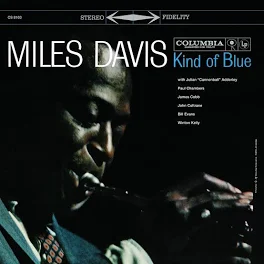 Here’s one from a legend: Miles Davis and his 1959 album “Kind of Blue.” I’ve been listening to this album for more than 50 years, and I can’t count how many times I’ve heard the track “All Blues” (I’ve played this tune with my trio many times as well). That said, the U-15s breathe new life into this track by first making instruments sound more like the real thing and, second, by revealing subtle nuances and details that draw you further into the performance as a real event in a real space. Case in point, the drummer plays the intro to the tune with brushes. Then, when Miles starts soloing, the drummer switches to drumsticks. When he does, I can hear him poke the ends of the wires on the brushes into the snare drum’s drumhead as he makes the switch. This makes a distinctive sound to a drummer’s ear, and most folks would never notice it. Still, it was there, and I could hear it clearly for the first time – one of those micro-details that enhance the illusion of live music being created by real, highly talented musicians. By the way, the horns on this album sound exceptionally realistic. It’s amazing how good some older recordings actually sound, and the U-15s certainly help them sound their best.
Jazz – big band:
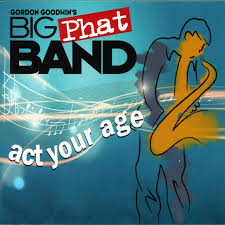 These days, my go-to track for big band jazz is “Backrow Politics” by Gordon Goodwin’s Big Phat Band, from the album Act Your Age. This is an excellent recording of a big band, featuring ensemble playing and wonderful trumpet solos by three players. On this track, the U-15s produce a soundfield that lets you “count” the players in their individual spaces on the stage. Each section – reeds, brass, percussion – appears in a distinct space, allowing for a very open sound that is never congealed. Turn up the volume on this track, and you have a front-row seat to an excellent performance with absolutely NO distortion to detract from the experience. When you have a loudspeaker the size of the U-15s you expect, and you get, the sound of a large ensemble with the proper scale. That is not achievable with smaller speakers and is one of the areas in which the U-15s excel.
Rock/Pop:
Check out Stop Making Sense (Special New Edition) (Live). The tracks captured the Talking Heads performing live in a venue with superb acoustics and ample ambient cues. Coupled with the sounds of the audience, tracks like “Psycho Killer” and “Burnin’ Down The House” take on a whole new life and drive as music can when performed live, I was particularly impressed with the track “Thank You For Sending Me An Angel” in which the drummer repeatedly strikes a small splash cymbal that sounds incredibly real (I guess that it’s an 8″ one, just like I have on one of my kits). Again, turn up the volume and enjoy the concert!
Classical – solo performer:
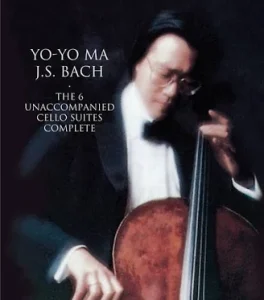 Yo-Yo Ma’s performance on the album “J.S. Bach: The Six Unaccompanied Cello Suites” is beautifully recorded and played by one of the true masters. From the opening notes of the first track, the sonic “picture” the U-15s present is so compelling in its purity and naturalness that you feel you MUST keep listening. To do otherwise would be an insult to the performer you feel is playing right in front of you as you sit in your front-row seat in the hall. Everything about this track sounds so right – especially the tonal beauty of the cello itself – that the overall effect is mesmerizing! WOW!!
Classical – full orchestra:
“The Tekton Design Ulfberhts will also amaze with their ability to present the impact, scale and sheer musical thunder of a full symphony orchestra.”……..and so do the U-15s.
In this category, my favorite symphony is the Mahler 2nd. With upwards of 100 musicians and 40 or so choir members, this recording of Leonard Bernstein conducting the New York Philharmonic is the version I prefer. This type of performance demands a system that can go “big” in terms of handling a work that features excellent dynamics and scale from both instrumental and vocal sources. The U-15s shine in presenting this work, and when the organ joins the orchestra for the climax, the whole house will shake from the power of the 32 hz organ pedal. It’s an awesome experience!!
 Not really classical in a pure sense, but great fun nonetheless is The Berlin Concert with John Williams conducting the Berliner Philharmoniker. This recent (2021) recording is a sonic treat if there ever was one – the delightful music of John Williams played by one of the finest symphony orchestras on the planet! As a bonus, it’s also a fantastic recording of a full symphony orchestra. The material consists of theme music from some of the many movie scores that John has written, and the sound is simply majestic: clarity, air around the instruments, hall ambience galore, thunderous bass, the walls and loudspeakers vanish, and you are treated to the sound and scale of a symphony orchestra at its finest. With all due respect to smaller loudspeakers, the U-15s move air SO effortlessly and without a hint of strain, thereby presenting the orchestra on a scale simply not possible with speakers of lesser stature. It is a treat to experience this recording, and once again shows that size does matter when it comes to getting as close as possible to the physical and emotional impact of works such as this. The U-15s’ ability to create a presentation that mimics the real thing is exceptional, setting this speaker apart from the crowd.
Electronica:
Now here is “music” that absolutely DEMANDS a full-range, no apologies loudspeaker. Not exactly my favorite genre, but indispensable for showing off the capabilities of a great loudspeaker, especially one that produces a vast soundstage and great bass – as does the U-15 (also good for annoying your neighbors if that is something you’re into -lol). Try anything by Boris Blank, e.g., “The Time Tunnel” from the album Electrified, perhaps “Ratchets” from the INFERNO / Ratchets release by Hedegaard, and your walls will disappear! Just be sure that there isn’t any glassware on nearby tables.
SUMMARY
 From this listing of material, my taste in music is quite eclectic, which is another reason I have come to admire the U-15s. No matter your favorite genre, the U-15s can make any music sound absolutely wonderful and engaging. From whisper-quiet classical to pant-legs-flapping rock, they are delicate yet powerful, becoming a sonic chameleon ideally suited to the music at hand. This lends itself to long, but very pleasurable, listening sessions that are so compelling that you find it difficult to stop. I often find myself listening into the wee hours of the morning because I don’t want to miss the next act in the “show” that the system puts on!
So, is the U-15 the loudspeaker for you? In a way, that depends on your priorities. If you want to brag more about how much your system costs rather than what it sounds like, perhaps this isn’t your cup of tea. If, on the other hand, you derive pleasure from your music rather than your equipment and want to experience the emotional connection to the performers who produce it, this IS a loudspeaker you should hear and judge for yourself.
CONCLUSION
I have not heard of all that are reported to be among the “best of the best” systems available today. Still, I have recently listened to quite a few systems with total system values ranging from $250,000 to $2,000,000 that would undoubtedly be considered among the “best of the best” contenders. Such systems featured loudspeakers priced from $100,000 to $800,000 and were, in some way, extraordinary, as they should be for those price tags. In listening to them, the systems I considered extraordinary all shared one characteristic: they allowed my imagination to experience and enjoy the performance as if it were live. Now, did they sound live? – of course not. No system does, regardless of its cost. What they did do, however, is, in some way, come close enough to the “absolute sound” so that listening created the involvement, pleasure, and even joy of the actual performance for me, the listener. I am writing this conclusion on my laptop as I sit listening to my system, and, for my purposes, I haven’t experienced anything yet that gets me any closer to that absolute sound than what I hear issuing forth from the U-15s right now. I can close my eyes and “see” Yo-Yo Ma in front of me playing Bach’s Unaccompanied Cello Suite, and hear him as if I were in the performance hall. Given the right associated equipment, the U-15s might do the same for you. Based on my recent listening experiences as cited above, it is my humble opinion that this loudspeaker has no real competition until you reach a price point between $100,000 and $150,000, and to better it, you’d have to go considerably higher. Therefore, I also feel Eric Alexander has created what I believe is among the best bargains in h
igh-end audio today—highly recommended!

Specifications:
Price: $10,000 pr
Made under U.S. Patent 9247339 with further patents pending
Proprietary 4-way loudspeaker design
Patented 15-dome radiating hybrid MTM high-frequency array
Beryllium high-frequency tweeter
Proprietary patent-pending 26mm 14 dome radiating hybrid midrange matrix array
Four 6.5″ mid-bass patented ‘overtone & harmonic’ bass transducers
New- dual 15″ subwoofers – purpose-engineered and designed for the Ulfberht
98dB 2.83V@1m sensitivity
4 Ohm design for optimum performance
20Hz-30kHz frequency response
1000 Watt power handling
Weight 230 lbs
Height 80.75″ (205.1 cm) x Width 16.0″ (40.64 cm) x Depth 17.0″ (43.18 cm)
Manufactured in the USA
Website: tektondesign.com
Ron Cook’s System:
Digital: Laufer Teknik Memory Player 64
Analog: VPI Aires TT, JMW Memorial tonearm, Benz Micro Ruby 2 cartridge, Behold phono stage
Amplification: Behold BPA-768 amplifier and APU-768 pre-amplifier
Loudspeakers: Tekton Ulfberht-15
Speaker and Digital Cables: Liquid Cables by Teknik Audio
Accessories and Tweaks:
Theoretica Applied Physics Bacch4mac Stereo-Purifier
Puritan line conditioner
Grand Activation Extreme HGA-6000 power cables
Kemp M100 AC conditioner
Frank Acoustics Power Bank
IPC Acoustic Energizers
HighEnd Novum PMR
Argent Room Lenses
Bybee IQSEs
QSA Silver and Red/black fuses
QSA speaker connectors and electrical outlets



Stereo Times Masthead
Publisher/Founder
Clement Perry
Editor
Dave Thomas
Senior Editors
Frank Alles, Mike Girardi, Russell Lichter, Terry London, Moreno Mitchell, Paul Szabady, Bill Wells, Mike Wright, and Stephen Yan,
Current Contributors
David Abramson, Tim Barrall, Dave Allison, Ron Cook, Lewis Dardick, John Hoffman, Dan Secula, Don Shaulis, Greg Simmons, Eric Teh, Greg Voth, Richard Willie, Ed Van Winkle, Rob Dockery, Richard Doron, and Daveed Turek
Site Management Clement Perry
Ad Designer: Martin Perry
Be the first to comment on: Tekton Design Ulfberht 15 Loudspeaker by Ron Cook