

Most Wanted 2025


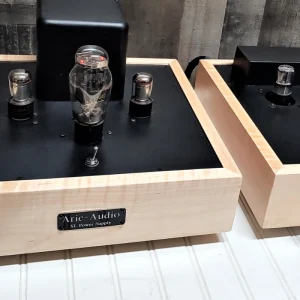
AricAudio Custom 5751 tube-based/tube-rectified preamplifier ($5,500): The AricAudio pre offers world-class performance in spatial qualities, tonality, and an ultra-detailed, sweet, high-end sound. I bought the review demo, and it’s my reference line-stage in my big rig. (review forthcoming). (Terry London)

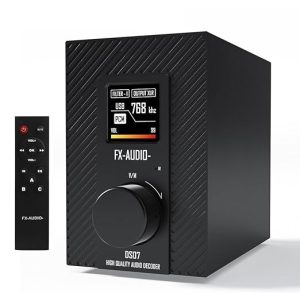
FX-Audio L07 integrated Amplifier ($199) and DS07 DAC ($199): Could the FX-Audio L07 amplifier and DS07 DAC/Preamplifier be the perfect pair for the desktop audiophile? In terms of affordability and performance, my answer is a resounding “Yes.” I’m as excited about this FX-Audio pair as Mr. Schifter of Vera-Fi Audio LLC is about its inclusion in the Vera-Fi Audio LLC product line. I now spend my days at the computer with these two components, listening through Vera-Fi’s crazy affordable Ranger L/S bookshelf speakers. These three products offer a good bit of, dare I say, musicality, at a “first system” price point. (reviewed here /Greg Voth)
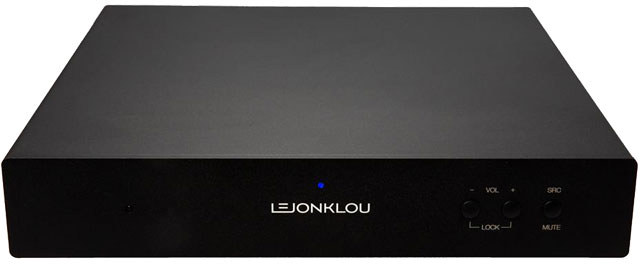
 Lejonklou Boazu 2.0 Integrated Amplifier ($6,195.00): The Boazu 1.x series captivated me immediately with its self-effacing musicality. The 2.0 is better still. It speaks with a bigger, bolder voice; one that is even pacier and more holographic. Unassuming and totally featureless, it’s an austere black box with a lyrical beating heart. My favorite solid-state integrated amplifier for sure. Review pending. (reviewed here /David Abramson)
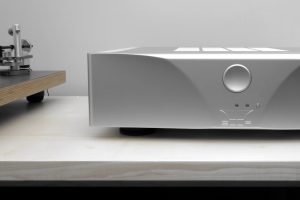
Naiu Laboratory GmbH Ella MKIII amplifier ($15,000/): The Ella uses a unique class-D circuit topology to deliver an exquisite sonic presentation, akin to 300B SET, and can deliver 400 watts into 4 Ohms. I bought the review sample because I was so impressed with the Ella MKIII’s performance. (reviewed here / Terry London)
Naiu Laboratory GmbH Ella MKIII amplifier: I must thank Terry London for pulling my coat on the Ella, for it is something special indeed. Its abilities at speed, finesse, harmonic integrity, and three-dimensionality are exceptional. At $15k, I consider it a wise and affordable alternative to what the competition is asking. (Clement Perry)
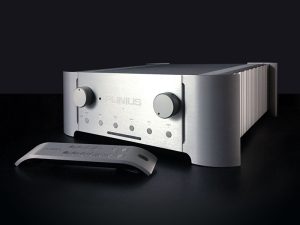
Plinius Reference M-10 Dual Mono preamplifier ($20,000): This is my reference solid-state preamplifier of the year. It brings a sense of “aliveness,” transient speed, and bass control that rank with the best on the market. However, its timbre presentation is sweet/tube-like, so the M-10 never sounds analytical or mechanical. (reviewed here /Terry London)
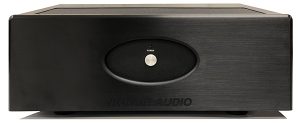
Rogue ST-100 Dark stereo amplifier ($4,995.00): I’ve owned the ST-100 since 2017 (as a secondhand purchase) and recently upgraded it to the ST-100 Dark, which has resulted in a nice performance boost. The improvement manifests further refinement, punchiness, and spatial resolution. The ST-100 is a wonderful amp that strikes a terrific balance of power and the special qualities of tubes. This amp has been a joy to listen to, sounding muscular yet refined. I listen in Triode mode, which provides enough power to nearly pressurize my room (with my DIY 88 w/db/m sensitivity speakers, which happen to be MTMs) while presenting amazing, real-time. I can listen all day without fatigue, and the amp keeps up with the most complex passages. The ST-100 Dark is a permanent fixture in my system, one I can build around for many years to come. (Rob Dockery)
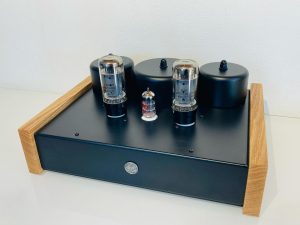
Pine Tree Audio Earth Tones SE Class-A 6L6GC tube amplifier ($1195): This is my budget amplifier of the year. It offers remarkable transparency/micro-details, beautiful tonality, and excellent slam and bass extension for SET design. It reminds me of a “baby” 211 amplifier. All this for around 1K. (review forthcoming) (Terry London)
Pine Tree Audio Earth Tones SE Class A Single-Ended Vacuum Tube Stereo Amplifier 12AT7/6L6GC – $1195 (review coming): If you have speakers with an efficient rating of 90 dB or higher, this amplifier is a wonderful surprise at an affordable price. The 6L6GC tubes are inexpensive compared to other SET designs, and the sound is full with surprising bass slam and natural midrange that SET designs are known for. The amplifier is dead quiet and has become my first choice for my system. (John Hoffman)
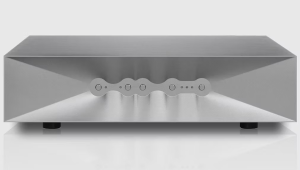
Thrax Orpheus MK3S Phono Preamp ($34,000): The Thrax Orpheus MK3S Phono Preamp is the latest addition to my Thrax family of components. In my experience with previous phono preamps I have owned, this one has proven to be the gateway to the purest analog sound. The build quality is sturdy, with unmatched, uncompromised engineering that captures every detail of your vinyl recording in its purest form. The Orpheus combines timeless vacuum tube technology with cutting-edge engineering to deliver a listening experience that is both transparent and emotionally captivating. (Moreno Mitchell)

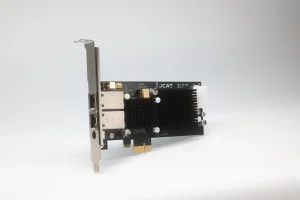
JCAT Net XE Evo (1400 €): The JCAT Net XE Evo is a good choice for folks who want to get the most out of their streaming experience and can expand their systems via PCI slots. I have tried several industrial high-speed SFP cage-type network cards that operate at much higher speeds (10 G, for example). While they sound amazing for the entry fee, they require additional heat management to be sustainable solutions. The JCAT Net XE Evo scales with power and even more with the JCAT Master OCXO’s clocking. This card has added refinement, clarity, dynamics, and musicality to my system. I highly recommend it for the serious DIYer. (Rob Dockery)
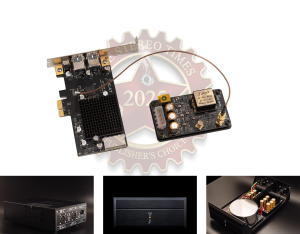
JCAT USB XE EVO ($1400), OCXO clock ($1400) and Optimo 3 PS ($2000): I, too, took the advice of Rob Dockery and purchased the JCAT XE Evo with the OCXO clock and Optimo 3 external power supply. The installation inside my Laufer Teknik Memory Player went off without a hitch, and the results have proved sonically staggering. Most obvious was the drop in the noise floor and the sheer level of relaxation that overtook the system. Dynamics seemed to go on forever, yet appeared better controlled with added weight and heft. Highly recommended (clement Perry)

LAiV Harmony µDAC ($1094) and DDC ($894): As 2025 rolled in, I vowed to upgrade what I felt was the weakest link in my audio chain: my aging Benchmark DAC1 HDR. Having been an unapologetic analog guy for most of my life, I’d done a truly admirable job of ignoring the warp-speed technological advances in digital audio. So I got to work studying YouTube reviews. Very quickly, it became apparent that there was a new company, grabbing everyone’s attention with their first product – the Laiv Harmony DAC @$2,700.
Based on the overwhelming success of that first product, Laiv began rolling out a whole series of new products. One of them is the more affordable little brother of the Harmony DAC, the $994 Micro DAC. My fuse was lit. Once again, the reviews were glowing – and I couldn’t sit on the sidelines any longer. A new DAC was my most wanted component. Could this be the one for me? I had to scratch that itch. Once I got one in my hand, in my own system, I was pretty quickly smitten. It didn’t take long for me to realize that this R2R sound was for me. Adding the DDC was just beautiful icing on the cake. Together, these two pieces were more than just good for the money (review in process). The only thing keeping me from consummating this newfound relationship is the nagging thought that I should reach for its big brother! (Ed Van Winkle)
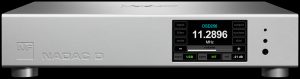
Master Fidelity NADAC D Digital-to-Analog Converter and NADAC C Master Clock ($27,500.00 for each component): A new digital format has emerged from the development of a custom designed audiophile-grade FPGA/CPLD based on a discrete native true 1-bit digital-to-analog converter employed in the Master Fidelity NADAC D. With the same approach being implemented in the NADAC C clock, the sound performance of both the NADAC D and C is unlike anything I have tested in digital audio and represents one of the best values offered given the overall performance of the duo and the initial investment in this new approach to digital audio. Having reviewed the predecessor, the Merging Technologies NADAC several years ago, I can say with certainty that the Master Fidelity NADAC D vastly outperforms the former, and with the addition of the NADAC C, the combo is reference-level end-game digital and presents music in an utterly engaging way that is closer to live music than I have ever thought was possible. The music floats in the air with a perfect balance of smoothness and accuracy, and, to my ears, is faithful to how musical instruments and vocals actually sound in real life. (Mike Girardi)
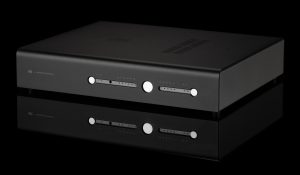
Schiit Audio – Yggdrasil+ Singular (Byggy): ($3,599 – Silver/$3,499 – Black)
The Schiit Audio Yggdrasil has always been an exceptional DAC. Since its 2015 launch, Schiit Audio’s flagship DAC has signified the company’s all-out commitment to delivering a flagship DAC, backed by years of industry experience. The goal is to deliver bit-perfect PCM playback, bringing listeners hours of enjoyment. I had been a member of the Yggdrasil journey since the A2 version became available, around 2020. Since then, I have enjoyed the LIM, MIB, and now Singular in my system. Singular takes a step away from the Multi-bit path, as it is “The only DAC in the world with no purchased or canned functionality. Uses our proprietary Singular™ FPGA-based delta-sigma modulator and discrete Nexus™ output stage. ” Given the quality and standards of Schiit Audio, this means A LOT, and I can attest to how much of a step up the Yggdrasil+ Singular has been in my system. Highly recommended, I am thrilled with what this dac does for my listening experience. (Rob Dockery)
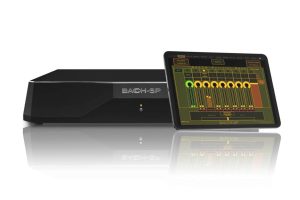
Theoretica BACCH-SP ADIO Stereo Purifier (starting at $26k): Easily the smartest upgrade and investment I’ve made thus far in my 50-year quest for audio nirvana. Although three or four times more expensive than the BACCH4MAC, side by side, I noticed it’s noticeably quieter, offers greater resolution, bandwidth, and dynamic range, and is ultimately more thrilling to listen to. (review in the works / Clement Perry)
Theoretica BACCH-SP ADIO Stereo Purifier (starting at $26k): The Theoretica BACCH-SP ADIO is a state-of-the-art digital audio processor that redefines stereo loudspeaker playback by delivering highly realistic, spatially accurate 3D sound. Developed from Princeton University’s BACCH® 3D Sound technology, led by Professor Egar Choueiri. Its core innovation lies in individualized, tonally-transparent crosstalk cancellation. The BACCH -SP ADIO unit also provides the ability to perform sophisticated room correction for one’s listening environment. My experience with Professor Choueiri’s audio technology has been second to none in reproducing the way music sounds in the original recording venue. I have been an avid lover of music and an audiophile for at least 60 years, and consider the technology in my Theoretica BACCH-SP ADIO unit to be the most audio-advanced product to come along at any time since the advent of stereo sound. Choosing this product has been the easiest decision I’ve ever made. This is why I have chosen the THEORETICA BACCH-SP ADIO as my 2025 COMPONENT OF THE YEAR! (Dan Secula)
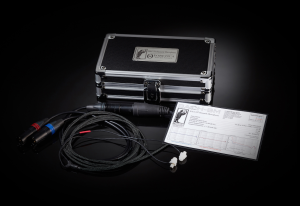
Theoretica BAACH4MAC Stereo-Purifier (starting at $8000): The most important title in Theorectica Applied Physics BACCH is the word PURIFIER. Of all its outstanding sonic virtues — there are plenty — what I hear and appreciate the most from the BACCH 4Mac is its remarkably high purity quotient. My brain doesn’t have to work as hard to figure out what’s going on, thanks to its sophisticated crosstalk and comb filtering cancellation software. Additionally, the room correction software is state-of-the-art due to its advanced in-ear headphone measurement technology. These combined technologies offer much greater sonic fidelity than any cable, AC conditioner, or component I am aware of or have experienced. The Theoretica Applied Physics BACCH 4Mac allows my music to sound freer, devoid of the typical 2-channel-specific space. Over and over, I’ve A/B’d ad nauseam, and in each case, the soundstage collapsed within itself into a two-dimensional and more complicated and less musical plane. To such a degree that I find it impossible to return. I admit, dear reader, I have happily dived down the rabbit hole of Theorectica Applied Physics BACCH. (reviewed here / Clement Perry)
Theoretica Applied Physics Bacch4mac Stereo-Purifier (starting at $8000): This is the easiest choice I’ve ever made for two reasons: first, it is a recent addition to my system, and second, it is the most significant improvement I’ve ever made in my 50+ years of dabbling in high-end audio. Readers may already be familiar with the BACCH’s technology, as it has been reviewed and discussed by this and other high-end periodicals. For this reason, it may seem that I’m just “piling on,” but the BACCH is such a game-changer that I had to choose it. The reason is that the BACCH takes the listening experience to a whole other level. Not only does it transform the listening space so that the speakers AND the room walls vanish, but, sounds themselves – voices and instruments – are MUCH more natural and lifelike. The overall effect is mesmerizing and draws you into the music like nothing I’ve experienced before. A no-brainer choice if there ever was one! (Ron Cook)
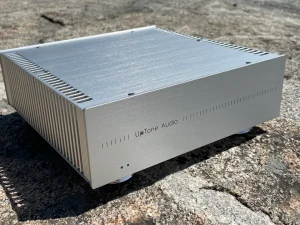
Uptone Audio JS-4 $1,375.00: Kudos to Uptone Audio for packing so much performance into a modestly sized enclosure, and at what could be considered a discount given the performance it delivers. The Uptone Audio JS-4 is a highly flexible LPS solution, offering two power rails with adjustable voltage settings (3.3V, 5V, 6V, 7V, 9V, 12V, 13.5V, and 15V). I use this LPS to power my JCAT Net XE Evo (the prior LPS, which shall remain unnamed, did not perform anywhere near as well, and the JS-4 has transformed my experience with the JCAT Net XE Evo for the better). Folks across the internet have reported stellar results with incorporating this LPS into their chains, powering their network devices, dac, and even smaller streamers. I, too, am looking forward to purchasing another when funds allow. Two rails of top-tier, adjustable, American-built power at such a reasonable price? Sign me up, again and again. (Rob Dockery)

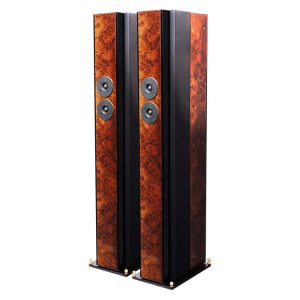
Brodmann VC7 ($27,000 to $40,000, depending on finish): The Brodmann VC7 loudspeakers have undergone three iterations since their 2008 introduction. The unique design aspects of Brodmann loudspeakers include: a) the use of the Horn Resonator to produce frequencies below 130Hz, b) the in-house produced driver designs, c) the lack of any damping material in the speaker enclosure, d) the crossover design and implementation, and e) the cabinet finish. The fit and finish of the VC7s are of the highest standards I’ve seen on any loudspeaker. The VC7s are captivating, soulful, and romantic speakers that sound so real you think you are kissing a beautiful woman on her voluptuous lips. The VC7s excel at rendering the natural tonality of different instruments and vocals with a deep saturation of color and lifelike transparency. They throw a wall-to-wall soundstage with tremendous depth perception. They image in 3D like no other loudspeaker I have heard. They are a coherent, single-driver loudspeaker. Their layering and texturing are authentic, and their driver and crossover combination results in a seamless transition across all frequencies. My new reference. (Mike Girardi)
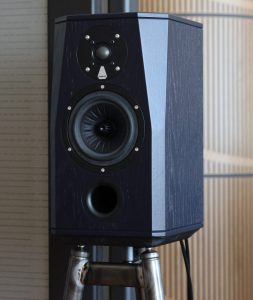
Driade Premium Model 9 Monitor Loudspeakers ($4,200.00/pr): As far as monitors go, there are revealing monitors and engagingly musical monitors, but rarely are both found in the same monitor. The Driade M9 is all at once revealing and engaging, and that combination is enough to make it well and truly revelatory. To date, the very best of its kind I have heard. Absolutely superb. (reviewed here / David Abramson)
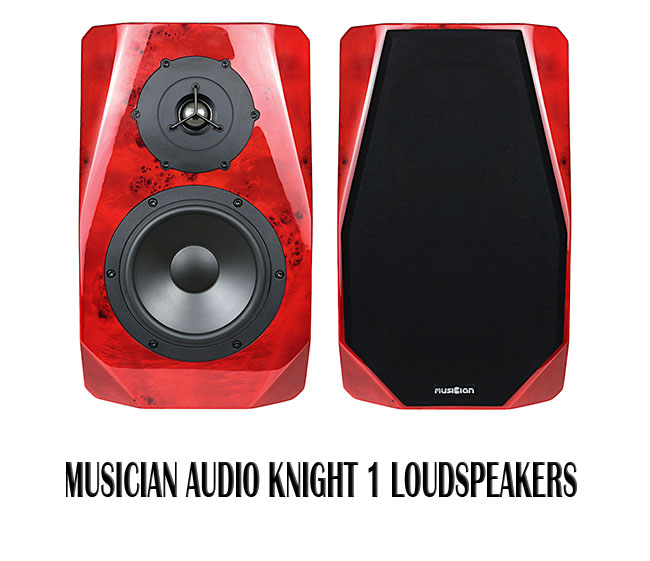
Musician Audio V2 Knight Speaker ($2000): The Musician is my budget speaker of the year. In 2022, I reviewed the first generation of the Knight I speaker and put it on the Most Wanted List because of its remarkable natural/musical performance; it competed with other speakers in the 5K price range, and its stunning physical appearance (14 layers of hand-applied lacquer) over red horse head natural veneer. The new V2 version, thanks to upgraded internal parts, raises the levels of dynamics, clarity, and bass control even further without losing the charming musicality of the original Knight I. The pair of V2s sent for review was clad in an Amber/Honey veneer and even exceeded the physical beauty of the Knight I’s appearance. I bought the review pair and use them in my smaller system. (review forthcoming). (Terry London)
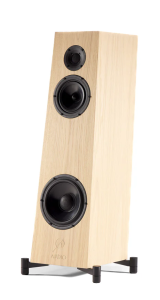
Ø Audio Frigg 02 Loudspeaker ($15000): With my solid-state Class AB amp, the Frigg 02 proved itself a fantastic introduction to the Ø Audio line, and many would be pretty happy to end their search there. I experienced both joy and near-disbelief at the whole cloth of musicality being delivered so effortlessly by the Firgg 02. While my Tekton Double Impacts do an impressive job at presenting dynamics and mid-range well, there was so much more there, from this, the Ø Audio brand’s point of entry model! Highly recommended. (Greg Voth)
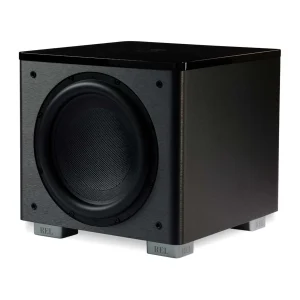
REL HT 1205 MK II Subwoofer ($895.00): Earlier this year, I finally decided to add a pair of REL HT 1205 subwoofers to my system after also buying a 98” TCL QM7k television. Adding the subs was a revelation, not only enhancing my enjoyment of watching movies but also allowing me to see just what good subs could do for music. A few months later, a friend let me borrow his 1205 MK II subs and promised that they would perform even better. He was right. The improvement, while not massive, was enough to have me considering replacing mine. The MK II features a 500-watt class-D amplifier and a 12” CarbonGlas driver. The result is a sub capable of playing louder and with more authority than its predecessor. (Dave Thomas)
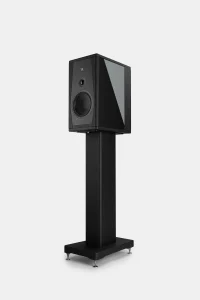
Rosso Fiorentino Arno 20 stand-mount speaker ($7000): My reference speaker of the year. Last year, I reviewed the big brother floor-stander, the Arno 40s, and it has since become my new reference speaker. If you have a standard-sized to smallish listening space, the Arno 20 speakers will get you very close to the beautiful musicality of the bigger 40’s for half the price. (review forthcoming). (Terry London)
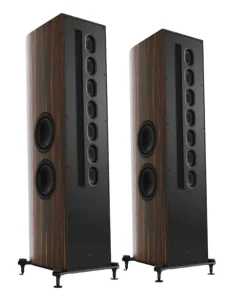
T+A Solitaire S 540 ($76,900.00/pr): During the 2025 AXPONA, I made repeated stops in one particular room to hear one particular pair of speakers, and that was the T+A room to hear the gorgeous Solitaire S 540 loudspeakers. Being a longtime Maggie fan, the 33” planar magnetic tweeter hit home for me, and the array of seven 3.5” oval mid drivers and four 8.5” woofers created an awesome, lifelike full-range experience. At more than $70k, they are way out of my price range, but I play the lottery weekly, so you never know. (Dave Thomas)
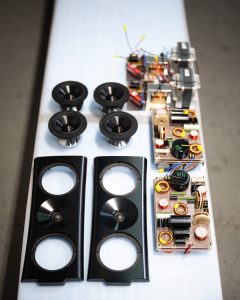
YG Acoustics Sonja 3.2 Speaker Upgrade: YG Acoustics speakers have long been recognized as an industry standard. I became a member of the YG family a few years ago. While quite satisfied with my present Sonja 2.2i model, YG unveiled its newest model, the 3, in 2023. After listening to a pair at an audio show in 2024, I immediately knew I wanted a pair; however, budget constraints and the awful thought of trying to sell my existing pair were a no-go. However, after speaking with a YG representative, I was informed that I could upgrade my existing 2.2i to a 3.2. After the upgrades were completed at the YG factory, the results were stunning—an absolute must-have for existing older Sonja and Hailey speaker owners. Contact your YG dealer for more information. (reviewed here / Moreno Mitchell)

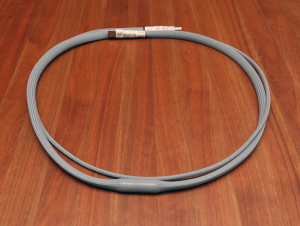
AA Audio Sig XT (Extreme) USB Cable – MK2 (1 meter: USD $1,125): AA Audio is a one-person shop based in Malaysia, run by Dr. Anwar Ali. For those of you with USB sources who have tried all ranges of USB cables, this one is undoubtedly worth a listen. I’ve had the opportunity to compare this cable with other cables costing multiples more, and this cable in my system provides a wonderfully low noise floor, extreme dynamic range, along with beautiful timbral expression. It is my endgame USB cable for the foreseeable future. The soundstage it produces is just glorious, and scales wonderfully with the quality of your source and DAC. It is neither warm nor too analytical. This to-spec cable is made of a silver-gold alloy (I provided feedback on its design over the last two years) that has helped it reach new heights in performance. If you seek a transparent, natural, lifelike sound, this cable may be for you. It is a hidden gem. Please feel free to check out more about Dr. Ali’s extensive background in the Semiconductor industry and his avid audio interests, which have led him to design top-tier, affordable solutions for audiophiles, in his bio. Find out more about the Mastermind behind this cable here. (Rob Dockery)
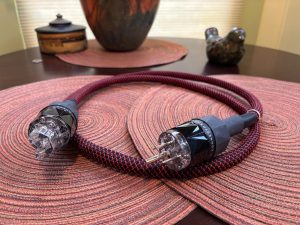
ArgentPur PC12 power cables: The ArgentPur PC12 power cable certainly added to my enjoyment of our Opera Consonance tube integrated. A much-played album had more “oomph” and a grander presence than previously heard. Instrumental body and presence were far and away superior with the PC12 in use. I found it hard to believe that our 23-year-old tube-integrated patient presented in this manner. (reviewed here /Greg Voth)
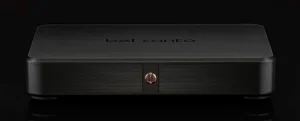
Bel Canto Design Black System – Power Supply Upgrade ($2,750.00): For several years, I have used the highly acclaimed, top-of-the-line Bel Canto Design Black System electronics in my reference system. The Black System comprises the Asynchronous Stream Controller (ASC2) linestage and PowerStream (MPS1) monoblock amplifiers. The good news for users of these superb electronics is that, because of the company’s innovative, flexible integrated architectural design approach, there will be cost-effective upgrades that make these products even more future-proof. One such upgrade is to the system’s power supplies. The cost of the power supply upgrade for the ASC2 is $350, and for the MPS1 it is $1,200. The total cost for the total system upgrade is $2,750. I will go into more detail about the upgrade in my upcoming review. But for now, I felt compelled to share my impressions of the sound. So, what does the Power Supply Upgrade do for your Bel Canto Black system? Well, bass reproduction becomes more solid, controlled, articulate, and impactful. Midrange performance is more open and transparent, and its musical colors are more distinct. Higher frequencies became more detailed and extended. Beyond that, dynamic contrasts and overall realism are elevated, along with a wonderfully open soundstage. Given the reasonable cost of the upgrade, if you have a Bel Canto Black system, this is a must. Review in progress. (Bill Wells)
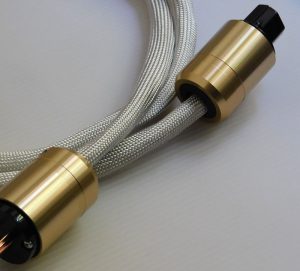
Dynamic Design Constellation VE Series Cables (RCA Interconnect 1.5M – $3,000; XLR Interconnect 1.5M – $3,000; XLR Interconnect 7.0M – $8,500; XLR Digital Interconnect 1.0M – $1,500; RCA Digital Interconnect 1.0M – $1,500; Speaker Cables (w/Bananas) 2.5M – $4,000; Speaker Cables (w/Spades) 2.5M – $4,000): I first reviewed the Dynamic Design Lotus II interconnects, speaker cables and digital cables in 2010. They were Dynamic Design’s entry-level high-end cables back then, excellent-sounding cables that competed with other high-end cables I owned at the time, such as Shunyata, Nordost, Snake River Audio, and others. Fast forward 16 years, and Dynamic Design has a new high-end entry-level cable line, the “Constellation” series. The Constellation cables incorporate new technologies derived from their Nebula VE series design. They are a neutral, balanced-sounding cable that favors no particular part of the music spectrum, ostensibly rendering highs, lows, and midrange accurately. The sound was detailed, dynamic, and naturally lifelike, whether I listened to cables with RCA or XLR connectors, and the same whether the speaker cables had spade or banana connectors. Sonically, the performance was exceptional, whether I was using AnnaLyric or Essential Sound’s Essence II powercords, but was clearly augmented by using the Constellation power cords, most noteworthy between my Inakustik power conditioner and my VAC amplifiers and my Bully Sound Company mono-amps. I can’t help but chuckle when I reflect that Dynamic Design considers these their high-end entry-level products. It boggles the mind to imagine what their higher-level lines must sound like. Review pending. (Mike Wright)
-300x200.jpg)
Grand Activation Extreme SC-2000 speaker cables ($2500): I put the Grand Activation speaker cables in my main rig and was immediately floored by the depth and dynamic heft the GA SC-2000’s provided. They added newfound musicality and noticeably denser low frequencies, bringing this system truly to another level. (Review to follow / Greg Voth)
Grand Activation Extreme SC-2000 speaker cables ($2500): My new reference! The Grand Activation Extreme SC-2000 cables have provided my system with a much-needed upgrade. My system has crossed into a new phase. Again, the improved soundstage has given my system a more immersive feel. I can hear more textures and the ebb and flow in my music like never before. The Grand Activation Extreme SC-2000 cables have delivered a more transparent, cleaner sound, with a darker background that has utterly captured me. The Grand Activation Extreme SC-2000 cables retail for $2,500. While these may be an investment, they can go head-to-head with cables that cost twice or three times as much. (reviewed here / Richard Doron)
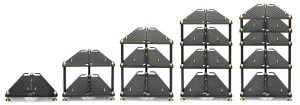
Live Vibe Audio Vibration Management RP-2 Rhythm Platforms ($5199): Last year, I purchased a pair of Live Vibe Audio RP-1 Rhythm Platforms. I was so impressed with their performance and ability to transfer energy and cancel vibration effects to my amplifiers, resulting in an improved sonic presentation. This led me to purchase a second pair of RP-JR-Advantage four for my REL Subs. These platforms are engineered to convert vibration into heat, thereby improving component performance. There is a definite science to these platforms, not just a placeholder for components. I am so impressed with their sonic improvement capabilities that, with the addition of a second pair of Thrax amplifiers for bi-amping, I purchased a pair of RP-2s to stack the 4 Thrax amplifiers. The reduction or elimination of vibration effects in audio equipment is essential to pure sound. Live Vibe Audio Vibration Management Rhythm Platforms has set the industry standard. I highly recommend. (reviewed here / Moreno Mitchell)
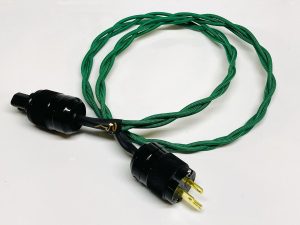
The Pine Tree Audio Scorpion power cord ($180) & Iso-Power 15A Power Filter – 8-outlet version ($300): These are my budget electrical products of the year. The Scorpion power cord and Iso-Power Filter replaced a $900 power cord and a $3,000 isolation transformer. They delivered better results in reducing the noise floor, improving overall dynamics, and delivering tighter, more refined lower bass frequencies. Quite the bargain, indeed. (review forthcoming). (Terry London)
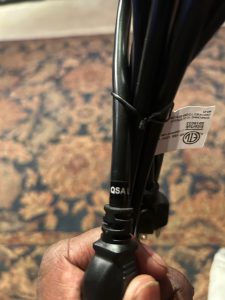
QSA Lanedri Veridion Discovery AC cord ($250): My time with the QSA Lanedri Veridion power cord was limited to hours, not days, yet the impact of this extremely affordable PC has stayed with me since. Instruments possessed greater air, delivered with greater warmth, prominence, and ease on an expanded stage. Delicate spatial cues stood out with more dimension. (Greg Voth)
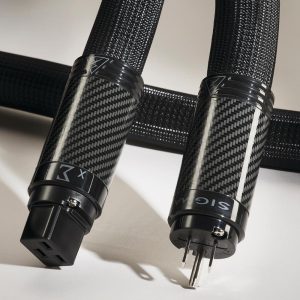
Shunyata X-Series Products: Usually, a Most Wanted award is given to a single product. But in this case, I am awarding it to a combination of patented technologies incorporated across multiple product levels and groups. Shunyata X-Series products range from power conditioning to power cords, interconnects, grounding hubs, grounding cables, and speaker cables. The wire products are available in Alpha, Sigma, and Omega levels.
I have been using Shunyata products for many years. Calen Gabriel is always pushing boundaries and creating better products. In my experience, the X-Series products are the most significant Shunyata advancement ever. Previous upgrades in my system had been incremental. X-Series products were transformational. My journey into the X-Series products started with Sigma-X NR power cords (reviewed here). I continued adding X-Series components until my central audio system includes a Denali-X, a Sigma-X USB cable, Sigma-X power cords, and Sigma-X grounding cables used with an Altaira chassis ground hub (reviewed here). Since products were introduced to my system a few items at a time over many months, I cannot say which had the most significant impact. Grounding was the biggest surprise. I now consider properly grounding equipment essential.
My system consists of high-level components from well-respected manufacturers. I did not realize how compromised their performance was. I failed to realize how insidious and pervasive noise is until I introduced the X-Series products from Shunyata. I essentially upgraded each component without replacing it. The rewards for incorporating chassis grounding and Shunyata X-Series products far exceeded my expectations. My system has reached a level I had only dreamed of, and I did not change a single core component. (Don Shaulis)
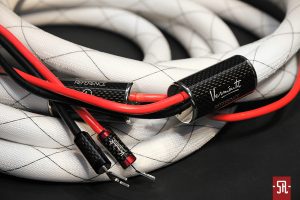
Vermouth Audio Reference speaker cable ($3,500) & Black Pearl MKIII XLR ICs ($1,238): My reference cables of the year. These sanely priced wires are beautifully crafted from the highest-quality components in Bali, Indonesia. In my reference system, they offer gorgeous tonality, see-through clarity of the micro-details in the music, robust, accurate, extended bass, tremendous natural spatiality/three-dimensional imaging, and an overall sense of liquidity and ease to my system. They outperformed my loom of wires that cost double the price of the Vermouth Audio cables. I purchased both the Reference speaker cable and the Black Pearl MKIII XLR ICs because they were so superlative in my system. (review forthcoming). (Terry London)
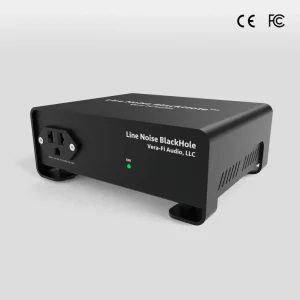
Vera-Fi Audio LLC Line Noise Blackhole: As promised, I’m including Vera-Fi Audio’s Line Noise Blackhole in my picks for this year. Music sounds more immediate and impactful, with a sharper focus. It’s not what the LNBH adds; it’s what it takes away, stripping out noise on the power line and allowing the system to perform at a higher level. Stunning. (reviewed here / Greg Voth)
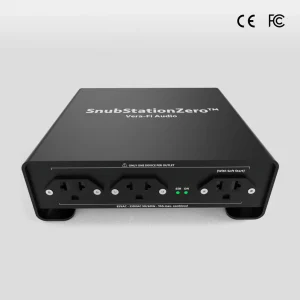
Vera-Fi Audio LLC Snub Station Zero: The Snub Station Zero’s ability to protect gear, lower noise, and elevate sound quality makes it a strong candidate for serious systems. In my secondary system, the SSZ’s inclusion greatly simplified what the power conditioner needed to serve. The soundstage expanded, clarity improved, and instrument separation became more distinct. At times, I even turned the volume down because the lower noise floor and enhanced detail made the music feel louder and more present. (reviewed here /Greg Voth)
Stereo Times Masthead
Publisher/Founder
Clement Perry
Editor
Dave Thomas
Senior Editors
Frank Alles, Mike Girardi, Russell Lichter, Terry London, Moreno Mitchell, Paul Szabady, Bill Wells, Mike Wright, and Stephen Yan,
Current Contributors
David Abramson, Tim Barrall, Dave Allison, Ron Cook, Lewis Dardick, John Hoffman, Dan Secula, Don Shaulis, Greg Simmons, Eric Teh, Greg Voth, Richard Willie, Ed Van Winkle, Rob Dockery, Richard Doron, and Daveed Turek
Site Management Clement Perry
Ad Designer: Martin Perry
Be the first to comment on: Most Wanted 2025