

Vermouth Audio Reference and Black Pearl series cables by Terry London
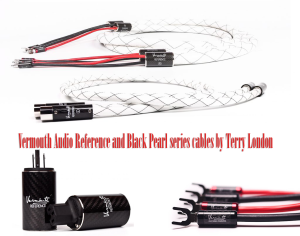
 In my August review of the outstanding Vermouth Audio Reference Micro Monitor speakers (here), I gave a brief introduction to the company’s location in Bali, Indonesia, and the excellent reputation of the owner and chief designer, Hendry Ramli. This reputation is based on the build quality and performance of his interconnects, speaker cables, AC powercords, and stand-mounted speakers. Vermouth Audio has five different levels of cables. When I discussed which level would be the most informative to my readers, regarding the “sweet spot” of price vs. performance with Joshua Masongsong, the U.S. importer of Vermouth Audio, we settled on the following models: Reference XLR interconnects / Reference speaker cable / Black Pearl MKIII XLR interconnects / Black Pearl MKII speaker cable. This will be the first review of the Black Pearl MKIII XLR interconnects, which were just released a few months ago. Over the last 10 years, numerous reviews of Vermouth Audio cables worldwide have found that they offer tremendous value, with build quality that rivals much more expensive wires and reference-level performance that competes with much more expensive wires, all at a very reasonable price, as stated above.
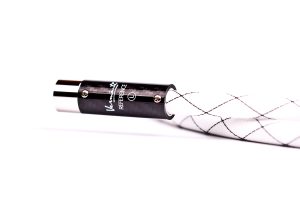
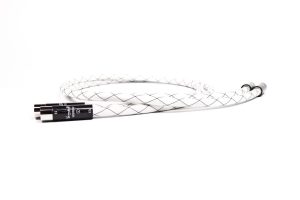
The Reference XLR interconnects are built according to the following design. Multiple size strands of OCC copper, with double PTFE tape protection, combined with Mylar wrapped braided OCC copper shield, and terminated with tellurium copper rhodium plated XLR plug/carbon fiber shell connector. The Reference speaker cable uses 207 OCC wires, divided into three subgroups, with Teflon layers separating conductors of six different sizes. The terminations are cold-forged tellurium-copper rhodium-plated copper with carbon fiber shells.
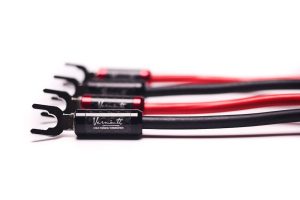
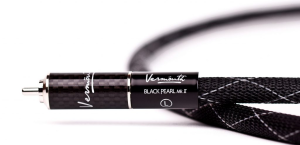
The first generation of Black Pearl XLR interconnects was launched from 2014 to 2020. This generation used OCC copper wire and tellurium copper terminations. The second generation of the Black Pearl XLR interconnects debuted in 2020, featuring an upgraded conductor geometry and greater variation in strand diameters. The Black Pearl MKIII interconnects were released in June 2025, featuring improved conductor geometry, filler materials, and upgraded graphene OCC copper. The Black Pearl MKII speaker cable uses OCC copper wire with a total gauge of 10AWG. It is composed of two  different conductor sizes and is terminated with cold-forged tellurium-copper rhodium-plated connectors and a carbon fiber shell. Hendry informed me that he is planning to introduce a new generation of the Black Pearl speaker cable, hopefully by the end of next year. Performance is always my highest priority. However, I want to share that the build quality of the Vermouth Audio cables is extremely high, and their physical appearance is truly “eye candy”.
As any seasoned audiophile knows, a loom of wires can sound spectacular in one system and just average/mediocre in another. Technical explanations can revolve around impedance or resistance mismatches between components, amplifiers, and the speaker interface. Of course, personal taste always enters the equation. I have sat in front of systems where the owner was delighted with how the new loom of wires had transformed their system towards audio nirvana. Yes, I found the system a smidgen more detailed than with the original loom, but now there was a slight brightness that took away my enjoyment of the music. Therefore, not only did I try the Vermouth Audio wires in both my systems, but I also had three other listeners experience them in their systems. Each system was very different in terms of whether it was tube-based or solid-state and the types of speakers used. All three listeners were delighted and are planning to purchase the Vermouth Audio wires. In two of the systems, the original looms cost at least twice as much as the Vermouth Audio cables!

I have spent many hours auditioning different combinations of Vermouth Audio cables to reach my conclusions about their performance.
Here’s the list of the different combinations:
- The Black Pearl XLR MKIII ICs with the Black Pearl MKII speaker cable.
- The Reference XLR ICs with the Reference speaker cable.
- One pair of the Black Pearl XLR MKIII ICs & one pair of the Reference XLR ICs with the Reference speaker cable.
- The Black Pearl XLR MKIII with the Reference speaker cable.
- The Reference XLR ICs with the Black Pearl MKII speaker cable.
I never experienced the original generation of the Black Pearl interconnects or speaker cable. However, the Black Pearl MKIII XLRs in my reference system are breathtaking in performance. They give up nothing in terms of superlative sound-staging, dynamics, bass articulation, and micro-details compared to the wonderful Reference XLRs. What they do surpasses the Reference XLRs in two ways. First, the gorgeous timbres/colors they add to the mix. Secondly, each image is more three-dimensional and fleshed out than the more expensive Reference XLRs. Whatever Hendry learned in the past few years has led to a Black Pearl MKIII interconnect that surpasses the terrific performance of the Reference XLR interconnect.
 The Black Pearl MKII speaker cable is also a terrific performer. However, the loom that swept me away into musical enjoyment, with engagement, intimacy, and a relaxation into the music at the highest level, was two pairs of the Black Pearl MKIII XLRs and the Reference speaker cable. Compared to the Black Pearl MKII speaker cable, the Reference speaker cable still offers more pristine clarity, a stronger sense of aliveness/speed, and allows the beauty of the colors/tonality to be heard more fully.
The Vermouth Audio wires are not inexpensive. However, based on their combination of very high-quality construction, materials, and superlative performance, they put many hideously priced cables to shame. Another way to explain my experience of the loom of Black Pearl MKIII XLRs and Reference speaker cables is to think of the beautiful timbres/ tonality, image palpability, and spaciousness that tubes provide, along with the clarity, transient speed/slam, and accurate deep bass extension that you find in the best solid state equipment. This loom also brings a sense of effortlessness/ease/liquidity, inviting you to relax into the music’s emotions. Yes, the Vermouth Audio loom, consisting of the Black Pearl MKIII XLRs and the Reference speaker cable, is my new reference cable. I bought the review samples, and they have brought my system to an even higher level of musical enjoyment.


Specifications
Reference speaker cable – 1.8 meter pair- Price $3114
Reference XLR- 1 meter pair- Price $3993
Black Pearl MKIII XLR- 1 meter pair- Price $1238
Black Pearl MKII speaker cable- 1.8 meter pair- Price $1824
All are composed of OCC copper with very high-end tellurium and carbon fiber terminations. The Black Pearl MKIII XLRs use graphene copper.
TJ’s Equipment
Source:
Reimyo DAP-999EX Toku DAC
Audio Note (UK) DAC 4.1 Balanced Signature
Pro-Jet reference CD transport & LTA power supply
Wadia 22 transport
Mark Levinson 31.5 transport
Amplification:
Coda S5.5 amplifier
Naiu Labs Ella MKIII amplifier
SPL S1200 amplifier
Aric Audio Custom Balanced 5751 tube-based preamplifier
Loudspeakers:
Rossofiorentino Arno 40
NSMT System Two
Tekton Design Ulfberth
Music Design Knight V2
Accessories:
Jena Labs reference AES/EBU digital cable
Vermouth Audio Black Pearl MKIII XLRs
Vermouth Audio Reference speaker cable
Krolo Design reference rack & footers
Puritan Audio power conditioner & grounding system
Audio Archon power cords


Stereo Times Masthead
Publisher/Founder
Clement Perry
Editor
Dave Thomas
Senior Editors
Frank Alles, Mike Girardi, Russell Lichter, Terry London, Moreno Mitchell, Paul Szabady, Bill Wells, Mike Wright, and Stephen Yan,
Current Contributors
David Abramson, Tim Barrall, Dave Allison, Ron Cook, Lewis Dardick, John Hoffman, Dan Secula, Don Shaulis, Greg Simmons, Eric Teh, Greg Voth, Richard Willie, Ed Van Winkle, Rob Dockery, Richard Doron, and Daveed Turek
Site Management Clement Perry
Ad Designer: Martin Perry
Be the first to comment on: Vermouth Audio Reference and Black Pearl series cables by Terry London